Get Full Government Meeting Transcripts, Videos, & Alerts Forever!
Get email alerts on the Public Participation topic
No spam. Unsubscribe anytime.
Oceanside council adopts SB707-driven public-comment rules, drops group presentations
Summary
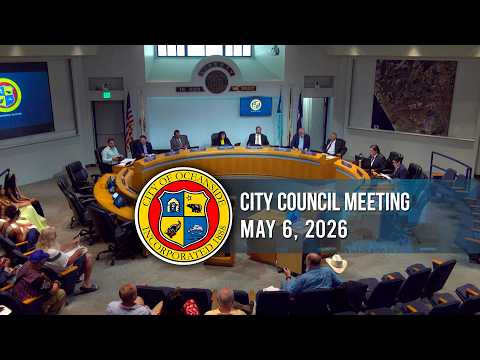
The Oceanside City Council voted 4–1 on May 6 to introduce an ordinance and update policy to implement SB707 requirements for equal remote and in-person participation, requiring speaker sign-up before the consent calendar and eliminating group presentations — a change that drew objections from residents who warned it could curb free speech.
Mayor Peter Sanchez and the council introduced an ordinance and adopted related resolutions to implement Senate Bill 707 requirements for equal participation by remote and in‑person attendees, prompting extended public comment and a split vote.
City Clerk Zeb Navarro told the council the changes would align the Oceanside City Code and Council Policy 103 with SB707 and standardize speaker deadlines and verification procedures. "One of the key requirements of SB707 is equal participation opportunities for remote and in-person attendees," Navarro said, and staff proposed that requests to speak on general and consent items be submitted before council consideration of the consent calendar and that group presentations be eliminated because remote verification of groups is administratively difficult.
Several public speakers urged caution. "Free speech is not free," said Jimmy Knott, arguing the early sign-up requirement and the loss of group presentations would limit citizens' ability to address the council, especially working families. Mary Ellen Reese of Represent Oceanside said restricting group presentations would reduce collaborative civic participation and risk silencing coordinated community voices.
Deputy Mayor Eric Joyce proposed an amendment to remove the pre-consent signup requirement for general items to preserve access for citizens who arrive after work; he said he feared the draft went "too far into restriction." That motion failed. Other councilmembers said staff has been developing the approach for months to meet the July 1 deadline and emphasized plans for public outreach and multilingual assistance.
Navarro said the clerk's office would make registration available as soon as the agenda is published and that staff would use outreach, KOCT public-service announcements and translated materials to help residents sign up in English and Spanish. The ordinance was introduced (first reading) and the resolutions adopted on a 4–1 vote, with Councilmember Weiss dissenting in part because of access concerns.
The ordinance will require a second reading and other procedural steps before it takes effect; staff said the code changes must be in place to comply with the state law’s timeline. The council directed staff to proceed with outreach and to monitor implementation, with a commitment to revisit the procedures if problems emerge.