Get Full Government Meeting Transcripts, Videos, & Alerts Forever!
Get email alerts on the Community Programs topic
No spam. Unsubscribe anytime.
Reading Pals volunteer program and community‑schools grant win board praise; early results show targeted supports
Summary
District staff highlighted Reading Pals volunteer literacy work (3,600 students, 77,000 volunteer hours) and described a five‑year Community Schools Partnership Program grant that is funding school social workers and intervention specialists at selected sites; presenters described early outreach and contact rates for foster and homeless students.
District staff used the March 12 meeting to showcase two community-facing initiatives: Reading Pals, a long-running volunteer literacy program, and the new California Community Schools Partnership Program grant that funds social workers and intervention specialists at selected school sites.
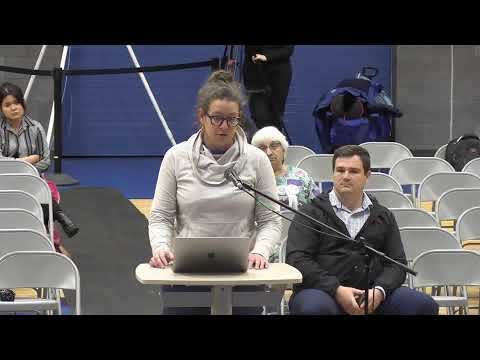
Reading Pals: Christy Bankson (MTSS coordinator) and Michelle Curran (executive director of Reading Pals) summarized volunteer training and classroom practices that focus on phonics, letter-sound mapping and small-group practice. Presenters and volunteers described the program s a tier‑2 support that pairs volunteers with students for weekly sessions. Program leaders said roughly 3,600 students have received one-on-one volunteer support over 77,000 volunteer hours districtwide and highlighted a 10th‑year anniversary and a Golden Bell Award from the California School Boards Association.
Community Schools grant: ED Services staff explained the district ward of a five‑year Community Schools Partnership Program grant and described initial implementation: hiring school social workers, adding elementary intervention specialists (0.8 FTE positions), establishing community‑schools advisory teams at each site and creating needs-and-assets protocols. Presenters said the initial sites include McManus, Chapman and Citrus elementary schools and several alternative-education campuses. Early data shared by staff showed social workers had contacted roughly 14.5% of students at the three elementary sites since January, with higher contact rates for foster and homeless students (presenter cited more than 65% of foster students and about 40% of homeless students receiving at least one contact). Staff said the grant emphasizes integrated student supports, expanded learning, family and community engagement and collaborative leadership.
Board members asked for data measuring academic progress and reductions in absenteeism among served students; staff said they plan to track those indicators and return with comparative outcome information as the program matures.
The presentations were informational; no board action was required.