Get Full Government Meeting Transcripts, Videos, & Alerts Forever!
Get email alerts on the Housing Displacement topic
No spam. Unsubscribe anytime.
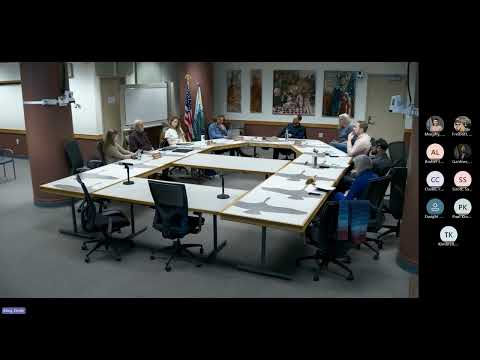
Plan Commission weighs anti-displacement policies as Plan Spokane 2046 is framed
Summary
At a March 25 workshop the Spokane Plan Commission discussed policies drafted under House Bill 1220 to identify and address racially disparate and displacement impacts, balancing new housing production with protecting existing neighborhoods; staff said policies set direction and implementation tools will follow.
The Spokane Plan Commission spent much of its March 25 workshop wrestling with how Plan Spokane 2046 should handle displacement and racially disparate impacts as required under House Bill 1220.
Marin, a planning staff member leading the presentation, told commissioners the state law requires jurisdictions to analyze historic and likely racially disparate effects and to propose anti-displacement policies. "Displacement looks at when a household is forced or pressured to move," Marin said, outlining residential and commercial displacement, drivers such as rising housing costs or infrastructure projects, and impacts ranging from lost community anchors to increased demand on emergency services.
Casey, who presented community engagement findings, said outreach in 2025 involved more than 300 participants and showed recurring themes: connected communities, affordability, and climate vulnerability. "We heard rising costs of housing, utilities and insurance are straining households," Casey said, and community suggestions included streamlined permitting, support for affordable multifamily housing, tenant protections and wildfire-risk mitigation tied to insurance costs.
Commissioners pressed staff on a core tension: siting higher-density housing where transit and services already exist can produce much-needed units, but concentrating investment can raise land values and push long-term residents out. Commissioner (Chair) (first speaker) warned, "When you have a positive impact, you positively impact the desirability. And that impacts the cost. And then we have these runaway situations." Several commissioners asked whether plan language should focus on avoiding disproportionate harm to historically marginalized areas or on intentionally prioritizing underserved areas for investment; staff said they intended to refine the text to focus on harm and balance with catch-up investment needs.
Brandon Whitmer, presenting the housing chapter updates, said the chapter emphasizes increasing housing supply as the top priority while also adding policies to retain existing housing stock and expand socioeconomic integration. Whitmer said the draft includes five new goals and 17 new policies informed by prior action plans and subcommittee input. Commissioners debated terminology and definitions: several urged clarifying whether "affordable" in the chapter should be labeled "income restricted," noting the chapter uses a 0–120% AMI range and that definitions should be explicit to avoid misinterpretation.
Commissioners also asked for clarity on policy details that are intentionally left for later implementation. On a proposed policy that would allow the "transfer" of city-owned property for housing, Commissioner Linda Carol asked whether "transfer" means sale, lease or other arrangements and whether transfers could produce rental versus ownership units. Staff reminded the commission that the comprehensive plan provides direction, not regulatory detail, and that property disposition decisions are ultimately a council-level, case-by-case matter with public-benefit criteria.
Staff emphasized that the comprehensive plan policies are directional: "These policies aren't the implementation," Casey said. The commission was told implementation mechanisms — code changes, regulatory tools and programs — will be developed after the plan is adopted.
What's next: staff said the land-use and housing chapters will continue to be refined in subcommittees, a full draft of the comprehensive plan is expected later this spring, and regulatory and programmatic tools to implement anti-displacement measures will be developed afterward.
Reported outcomes: no formal vote on policy language was taken at the workshop; the commission provided extensive feedback and directed staff to clarify policy language and definitions before the next review.