Get Full Government Meeting Transcripts, Videos, & Alerts Forever!
Get email alerts on the Cannabis Regulation topic
No spam. Unsubscribe anytime.
Ceres council caps storefront cannabis shops at two and adopts licensing, zoning and tax rules
Summary
On March 23 the Ceres City Council voted to cap storefront cannabis dispensaries at two, approved zoning and licensing changes to make the pilot program permanent, and set cannabis business-tax rates including 4% for storefronts and 3% for manufacturers.
The Ceres City Council voted March 23 to overhaul local cannabis rules, limit storefront dispensaries and set business-tax rates in a package of ordinances and a resolution.
Council approved a regulatory ordinance that will require cannabis businesses to hold a city business license, negotiate a development agreement and obtain a cannabis conditional-use permit; the council added a cap limiting storefront dispensaries to two and delegated enforcement to the police chief. Vice Mayor Martinez's motion to adopt Item 11A with the two-storefront cap and police enforcement passed 5'0'00.
Separately the council introduced and approved a zoning text amendment (Item 11B) that ties those regulations to land-use rules and conditions for security, odor control and waste management; that motion also passed 5'0'00.
On Item 12 the council adopted a cannabis business-tax resolution setting rates at 4% of gross monthly receipts for storefront dispensaries, 3% for manufacturing, 2% for distribution and 1% for testing laboratories. For cultivation the council adopted a $4 per-square-foot rate or 3% of gross receipts, whichever is lower. The tax resolution passed on roll call 4''01, with Councilmember Casey voting no.
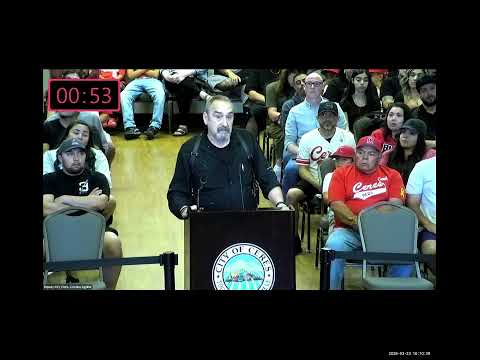
Case Manufacturing representatives used the public hearing to request relief and accused city management of unfair enforcement actions. Drew Ford, the company's chief science officer, said the company received a shutdown notice it characterized as retaliatory and asked the council to stay that notice and order an independent review of City Manager Douglas Dunford's conduct: "This is not enforcement. This is obstruction," Ford told the council. Council did not take immediate action on the company's request during the meeting.
The council majority framed the changes as a path to better oversight and greater fiscal predictability for the city, while some members stressed the need for enforcement and vendor compliance to prevent illegal activity and protect neighborhoods.