Get Full Government Meeting Transcripts, Videos, & Alerts Forever!
Get email alerts on the Zoning topic
No spam. Unsubscribe anytime.
Seward enacts zoning and sign-code updates, allowing veterinary services in institutional zones and expanding feather-sign use at events
Summary
The council enacted three ordinances: revised definitions to allow veterinary hospitals in institutional zones, sign-code updates that remove content-based rules and allow feather signs at community events, and clarified mixed-use development rules to permit apartments above commercial spaces in certain districts.
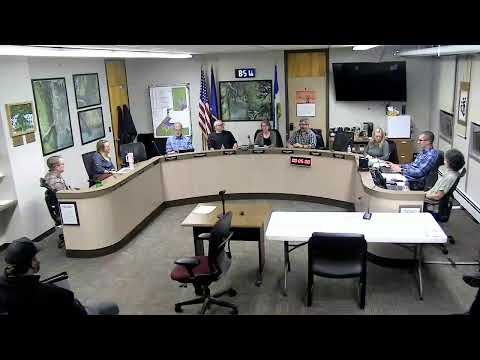
Seward's City Council enacted three ordinances on Oct. 13 that update land-use definitions and the city sign code and clarify rules for mixed-use development.
Courtney, a planning-and-zoning staffer, told the council Ordinance 2025-014 amends Seward City Code to clarify definitions for "veterinary hospital" and "animal shelter" after temporary veterinary services were offered at an animal shelter located in an institutional zoning district. The change allows veterinary services by right in specified districts to improve access to veterinary care.
Ordinance 2025-015 updates the sign code after a planning-and-zoning review beginning in 2023. Courtney said staff removed content-based definitions (for example, political signs) and revised provisions to comply with U.S. Supreme Court guidance on content neutrality. Council debated and approved an amendment to the proposed code that removed the phrase "by mobile vendors" from the feather-sign allowance so that feather signs may be used during scheduled community events as approved by an administrative official; proponents said the change will reduce enforcement confusion and help community events such as the Mermaid Festival.
Ordinance 2025-016 addresses housing by defining "mixed-use development" and allowing apartments in commercial buildings outright in the Central Business and Harbor Commercial zoning districts. Kelly Hatfield, a property owner and prospective developer, said clearer rules would make developing retail-with-apartments financially feasible and support year-round housing. Council members asked questions about the harbor-area 38-foot height allowance; administration said design standards and lease terms for city-owned uplands will guide building form and preserve visual consistency.
All three ordinances passed following public hearings with no substantive opposition recorded in the meeting packet. Council members praised planning-and-zoning staff for addressing long-standing language issues and reducing uncertainty for developers and event operators.
The amendments take effect according to city code timelines for ordinance enactment; planning staff will follow up with implementation guidance and design standards where noted.