Get Full Government Meeting Transcripts, Videos, & Alerts Forever!
Get email alerts on the Lead Lines topic
No spam. Unsubscribe anytime.
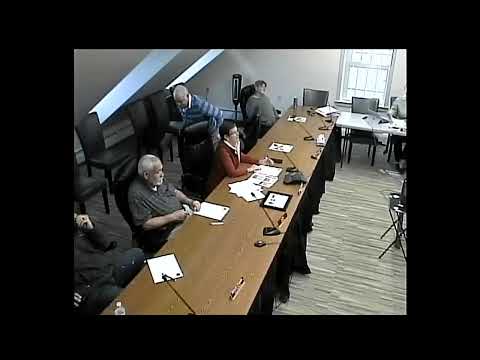
Belmont officials outline DES plan to identify and replace unknown water service lines
Summary
At a Board of Selectmen meeting, staff explained New Hampshire DES and EPA requirements to inventory and, if necessary, replace lead service lines by 2037, described free testing kits and inventory steps, and warned that sampling can show only presence, not absence, of lead.
Staff member (speaker 8) told the Belmont Board of Selectmen that state and federal rules require the town to identify water-service line materials and to begin a long-term program to replace any lead or galvanized lines by 2037.
"We have to identify them per EPA," the staff member said, describing a 13-year compliance window and a multi-year inventory process. The town has begun distributing testing kits supplied by the New Hampshire Department of Environmental Services (DES) and will attempt at least four contacts with homeowners to collect samples.
The staff member cautioned that sampling has limits: "Sampling can only be used to prove the presence of lead. It cannot be used to prove the absence of lead," a point emphasized in DES guidance the staff distributed to the board.
Board members asked who pays for testing and how reluctant homeowners will be encouraged to participate. The staff member said DES supplies the test bottles and that there is grant funding for inventory work, but noted many homeowners decline tests because they fear subsequent replacement costs.
The meeting record shows the board discussed technical identification options that do not require homeowner cooperation, including potholing at the curb stop and hydro-excavation to inspect the service material. The staff member said such excavation work is eligible for loan or grant funding tied to the lead-line program.
Board members also raised public-health messaging for parents and residents, noting that reduced thresholds for elevated lead levels mean clearer public-health risks and the need to encourage testing. The staff member said the first four years of the 13-year program will focus on establishing an inventory and that the town is already working with an engineering firm on initial mapping.
The board did not take a vote on funding at the meeting; members asked staff to continue outreach and to return with cost estimates and grant-application timelines. The town indicated it will receive follow-up letters from DES next year as part of the phased program to identify service-line materials.