Get Full Government Meeting Transcripts, Videos, & Alerts Forever!
Get email alerts on the Juvenile Diversion topic
No spam. Unsubscribe anytime.
Nonprofit presents data on juvenile hearing board, committee and police discuss referrals
Summary
Rhode Island for Community and Justice briefed the Pawtucket School Committee on Juvenile Hearing Boards, reporting a statewide decline in JHB cases and local data showing 11 JHB cases in Pawtucket in 2024; members and local detectives discussed referrals, eligibility and case management as a diversion from family court.
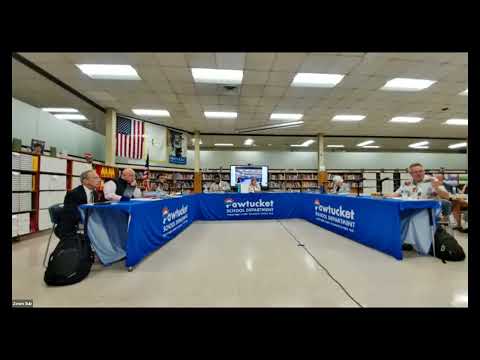
Rhode Island for Community and Justice (RICJ) executive director Rose Albert presented to the Pawtucket School Committee on May 26, explaining Juvenile Hearing Boards (JHBs) as a community‑based diversion for first‑time juvenile misdemeanors and sharing 2023–24 statewide and local data.
Albert said the statewide number of JHB cases fell from 313 in 2023 to 242 in 2024. For Pawtucket specifically she reported 16 cases in 2023 and 11 in 2024, and described JHBs as restorative programs that keep youth out of family court while connecting them with case management and community supports.
"We are a nonprofit organization ... with a mission to fight reduce bias, bigotry, and racism," Albert said in introducing RICJ’s role supporting JHBs. She described services RICJ provides, including case management and youth programming, and emphasized that the JHB process requires parental consent and a youth’s willingness to accept responsibility as part of eligibility.
Detective sergeant Paltrow of the juvenile bureau explained that referrals come through juvenile detectives (including school resource officer arrests) and that cases must fit local ordinance criteria to be eligible for a hearing board. Committee members pressed about checks to ensure eligible youth are not diverted to family court in error and about parental education and outreach to increase informed participation.
RICJ and police officials described the diversion’s outcomes as promising — Albert and police staff said reoffense rates for similar low‑level offenses were lower for youths who participated in JHBs than for those who went to family court — and committee members asked the administration to strengthen coordination, public outreach and the city’s MOU with schools.
What happens next: RICJ offered to follow up with additional materials and to meet with school staff and police to explore a tighter referral pathway and family outreach so eligible youth and guardians understand the option.
The committee thanked RICJ and the juvenile bureau for the presentation and invited further collaboration.