Get Full Government Meeting Transcripts, Videos, & Alerts Forever!
Get email alerts on the Survey And Programs topic
No spam. Unsubscribe anytime.
Groveland Council on Aging: 504-survey response drives focus on housing, transportation and walkability
Summary
The Groveland Council on Aging reported 504 completed responses to its initial community assessment; Director Alyssa Lee said the survey and January service data — including 1,300 interactions — will guide programming and town advocacy on housing, transportation and taxes.
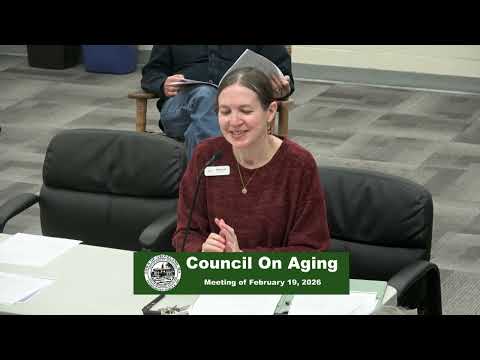
Groveland — The Town of Groveland Council on Aging board heard Feb. 18 that its community assessment survey drew 504 completed responses and that January service volumes remained high, signaling resident concern about housing, transportation, walkability and tax burdens.
Alyssa Lee, director of the Council on Aging, told the board the senior center documented “over 1,300 interactions with the community in January,” with the pantry distributing about 1,700 pounds of food and eight new program participants joining in the month. Lee said the high response rate — 504 closes to the survey’s deadline — gives the board a robust starting point for analysis and town-level advocacy.
“The survey hit our target of 500; at closing we had 504 completed responses,” Lee said. She told members the highest-response topics were housing and transportation and that many write-in comments emphasized walkability and residents’ desire to remain in Groveland. Lee said the COA will provide a 130-page full report to board members and present a detailed analysis at the next meeting to shape programming and potential advocacy efforts with town government.
Lee also outlined next steps for new programs and training tied to those findings: the center will implement an evidence-based cognitive stimulation therapy (CST) program after selection for a Massachusetts Councils on Aging (MCOA) cohort. Training will begin in March; the COA is required to offer two CST sessions between May 2026 and May 2027.
Board members discussed how to share results with the broader community and town officials. Lee said she plans to hold public sessions to share findings and recommended actions and that the COA will work with town staff to align any policy or infrastructure requests (such as sidewalks or transportation improvements) with the survey evidence.
On budget and operations, Lee said the COA’s finances are stable and that a MassDOT grant reimbursement of $5,000 is being submitted. She also reported a staffing need: a van driver will depart in April and the COA has eight applicants for the part‑time (about 13 hours per week) driving position; initial interviews and driving tests are underway.
Board members praised the outreach and emphasized the need to reach those who did not respond to the survey. Lee cautioned that, because survey questions were optional, not every question received 504 answers, and she recommended careful interpretation of topic‑by‑topic totals.
The board did not take a formal vote tied to policy changes at the Feb. 18 meeting; Lee said the COA will return with a fuller analysis and proposed next steps at a subsequent meeting.