Get Full Government Meeting Transcripts, Videos, & Alerts Forever!
Get email alerts on the Marijuana Regulation topic
No spam. Unsubscribe anytime.
Groveland board directs staff to advance recreational‑marijuana bylaw to planning process
Summary
After a presentation by the town planner, the Select Board voted to consolidate and move forward with draft zoning language that would allow recreational marijuana retail and non‑retail establishments; the measure now goes to the planning board and, ultimately, to town meeting for voter approval.
The Groveland Select Board voted to direct staff to consolidate draft zoning bylaws and pursue the planning‑board process for allowing recreational marijuana retail and non‑retail establishments in town.
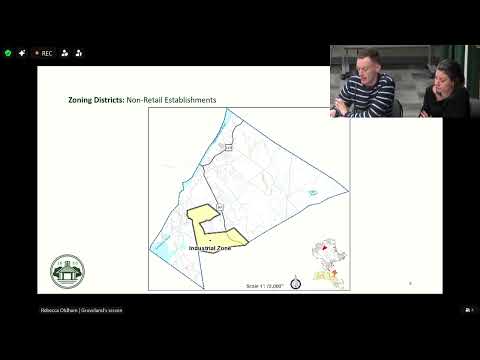
Town planner and conservation agent John Sullivan presented three options: a retail‑only bylaw, a bylaw limited to non‑retail marijuana establishments (manufacturing, cultivation, testing and related uses), and a combined draft that would permit both retail and non‑retail uses in specified zones. Sullivan said the drafts were modeled on the town’s existing registered‑marijuana dispensary section and on state regulatory language. “I am the town planner and conservation agent,” Sullivan said while walking through the proposed definitions, zoning districts and special‑permit requirements.
Under the draft language, adult‑use retail would be allowed in the business and industrial districts subject to a special permit from the zoning board of appeals and site‑plan review by the planning board. Key limits in the draft include a 100‑foot building‑to‑building buffer from residences and a 500‑foot lot‑line buffer from schools, day cares and playgrounds; no on‑site consumption would be permitted; premises must be fully enclosed; and a host‑community agreement and state Cannabis Control Commission licensing would be required. Sullivan also described special‑permit rules including nontransferability and a three‑year lapse provision if a permittee had not begun operations.
Select Board member Becky emphasized the potential revenue, pointing to neighboring towns’ experience: “Cannabis consumption is already happening in Groveland. But right now, we’re exporting both economic activity and tax revenue that could be staying here,” she said, urging a careful approach that would still allow retail. Town staff noted that Merrimack’s early retail store generated roughly $30,000 in local option tax revenue in FY2024 and about $50,000 in FY2025, figures included in a memo provided to the board.
Select Board member Ed raised objections to permitting, citing federal‑law concerns and social impacts. During the roll call vote on a motion to move forward with a consolidated retail-and‑non‑retail draft and begin planning‑board review, Ed voted no. The motion passed on roll call 3–1 with one member absent.
Next steps: staff will prepare a consolidated bylaw, submit the draft to the planning board for site‑plan and public‑hearing review, and, if finalized, include an article on the annual town‑meeting warrant so registered voters can decide whether to adopt the change.