Get Full Government Meeting Transcripts, Videos, & Alerts Forever!
Get email alerts on the Energy Infrastructure topic
No spam. Unsubscribe anytime.
Residents deliver 875-signature petition urging Reno County to pause data centers and battery storage; commission schedules study
Summary
Residents delivered an 875-signature petition and multiple public comments urging a county moratorium on battery energy storage systems (BESS) and hyperscale data centers, citing water use, noise, fires and public-health risks; commissioners said they will review the issues in upcoming study sessions and noted no county permit applications are currently before them.
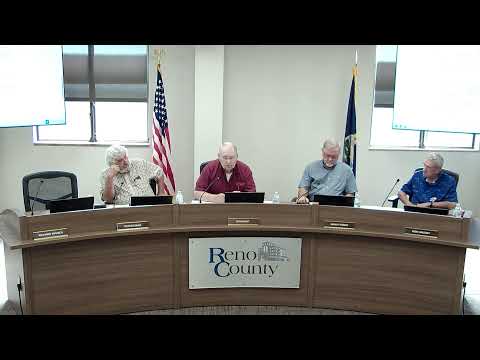
Dozens of Reno County residents urged the Reno County Commission on May 27 to adopt a moratorium on battery energy storage systems and large data centers until officials complete further study.
Susie Ratzliff presented 875 petition signatures asking the board to halt BESS and data center development, saying petition signers are motivated by concerns including tonal noise, PM2.5 from backup diesel generators, thermal runaway in lithium-ion batteries and risks to regional aquifers. "These signatures represent a wide range of people," Ratzliff said, adding that residents are worried about impacts to livestock, plants and water.
Other residents repeated those themes. Vicky Jackson asked commissioners to clarify whether local workers would be hired for construction and operations and pressed officials to explain nondisclosure agreements (NDAs) that residents say have limited public information. Erin Hodgson told commissioners she was "insulted" by the perceived lack of transparency and cited neighboring counties that have enacted moratoriums; she said pauses allow governments to study risks without blocking investment.
Medical and technical concerns featured in several public remarks. Dr. Dawn Varney, identifying herself as a physician, listed what she described as ten reasons to oppose local data centers, including high water use (she cited a reported need of 900,000 gallons per day for a proposed facility), potential effluent contamination, noise and air-pollution concerns. Erin Baker, noting recent lithium battery fires at the county landfill, warned that thermal runaway at industrial scale could propagate across large battery arrays and pose severe safety and cleanup challenges.
Commissioners responded that they have heard public concerns and are researching the issue. Several commissioners said no land purchases or permit applications for BESS or large data centers have been filed with the county and that, in some instances, proposals may involve city jurisdiction. One commissioner noted that commissioners sometimes sign NDAs during early economic-development discussions and that the county is limited in what it can disclose while negotiations remain confidential. Staff said the planning commission has asked for direction to begin studying the industries and that legal review would accompany any future county cosponsorship of grants.
The board did not adopt any formal moratorium or ban on May 27. Commissioners scheduled additional review: staff noted a data-centers discussion would appear in an upcoming budget study session and a follow-up study session on June 9. The commission also encouraged staff to provide legal and technical analysis before any regulatory actions or cosponsorship decisions.
Next steps: commissioners said they would consider findings from the planning department, legal review and any public-safety or environmental analyses before taking formal action.