Get Full Government Meeting Transcripts, Videos, & Alerts Forever!
Get email alerts on the Municipal Vehicle Policy topic
No spam. Unsubscribe anytime.
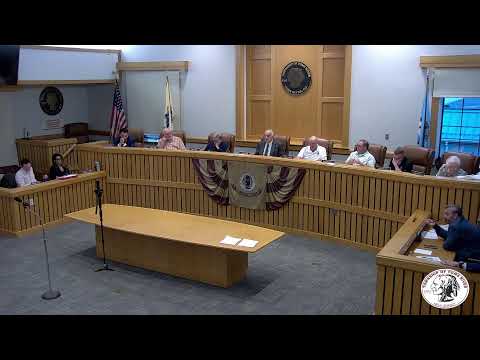
Toms River council approves tighter municipal vehicle rules after heated debate over mayor’s use
Summary
After public comment and sustained argument on whether the mayor should be allowed personal travel in a township vehicle, the Toms River council approved a revised vehicle-use ordinance limiting cars to official business; the vote follows criticism about part-time officials’ benefits and questions about commuting rules.
The Toms River Township Council approved a revision to the municipal vehicle policy in a contested vote after an extended public comment period and debate among council members and the mayor.
The ordinance, a second reading of a change to section 23-10 of the Toms River code defining "official business," passed after a motion by Councilman Bradley and a second from Council Vice President Nieveson. Supporters said the measure clarifies that township vehicles are for official business only and requires documentation when a vehicle is used outside township limits; opponents warned the language could be applied unevenly.
Mayor Daniel t Roderick (as identified in the proceedings) said he was "perfectly okay with giving it up" if the council would pursue other cost-saving measures, and he repeatedly argued the vehicle is part of compensatory benefits for mayors. "I'll gladly give up the compensation," the mayor said, adding he did not believe his routine use rose to misuse.
Residents who spoke during the public comment period underscored competing points. Janet Lang, who said she obtained payroll documents through an open records request, told the council the town reported an auto fringe benefit of $1,207.87 for the mayor in 2025 and questioned whether that matched actual vehicle use. "There is a line for auto fringe," Lang said, adding the payroll entry does not capture full costs such as fuel and tolls.
Joanne Greenberg, another resident, cited the existing code language that "traveling to and from work shall not be considered official business" and urged the council to consider the length of the mayor’s commute as part of the policy discussion.
Council discussion focused on enforcement and exceptions. Councilman Coleman argued that prior mayors kept vehicles for expected duties like ribbon cuttings and emergency callouts and said earlier practices should be recognized. The council agreed the ordinance would allow documented travel outside town for official duties but prohibit routine personal use and require logs.
The roll-call vote on the ordinance showed an affirmative majority; Councilman Coleman and two other members voted no. Council members said the change is intended to reduce ambiguity, require logs for out-of-town travel, and align municipal practice with the town’s vehicle policy.
The council said the ordinance becomes the controlling policy for municipal vehicle use; enforcement steps and log-keeping requirements were discussed as next steps.