Get Full Government Meeting Transcripts, Videos, & Alerts Forever!
Get email alerts on the Budget topic
No spam. Unsubscribe anytime.
Freehold Regional board approves FY2026–27 budget after presentation on state aid losses and health‑care pressures
Summary
The Freehold Regional High School District board approved the 2026–27 budget after Assistant Superintendent Alex Ferrer outlined a proposed budget above $246 million, a multi‑million dollar gap, and measures including surplus use, a health‑benefits waiver and program changes to close it. The motion passed by roll call.
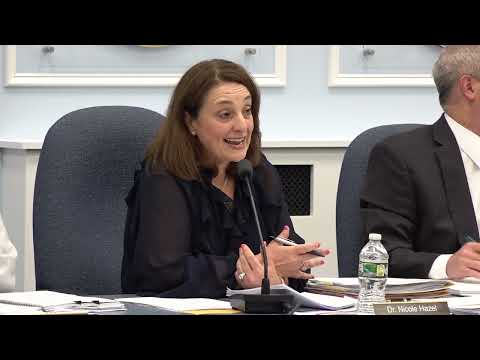
The Freehold Regional High School District board approved the district’s fiscal year 2026–27 budget during its July 7, 2025 meeting after a detailed presentation by Assistant Superintendent for Business Administration Alex Ferrer and a roll‑call vote.
Ferrer told the board the administration’s proposed budget “stands at over $246,000,000” and identified a recurring budget gap of roughly $7.4 million driven by inflation, rising health‑care costs and constrained revenue sources. He said the district plans to close the shortfall by using the FY26 surplus, increasing tuition revenue for certain special‑education placements, adopting a health‑benefits waiver and implementing attrition‑based staffing reductions.
The presentation outlined the district’s fund structure and emphasized the operating fund (Fund 10) as the primary focus. Ferrer reviewed key revenue drivers — the local tax levy, state aid and tuition — and highlighted a projected roughly 15% rise in medical costs that is contributing to a larger net increase (about 13%) in total benefit costs. He also told the board the district will set aside $75,000 to liquidate longstanding unpaid school‑lunch receivables and described planned facilities and maintenance investments including wastewater‑plant work, additional generator tie‑ins, fire‑alarm and HVAC upgrades, roofing and security‑camera improvements and two additional tennis courts.
“Every decision we make here, our long‑term planning to our daily operations is designed to protect the future of our students,” Ferrer said during the presentation, adding that administrators tried to preserve programs while narrowing the deficit.
Superintendent Mr. Messinger opened the public hearing and framed the budget in the context of declining state aid, telling the board the district and administration have repeatedly advocated at the state level for changes to the funding formula.
Board discussion before the vote touched on staffing and enrollment trends. Ferrer gave the current head‑count at about 1,139 employees and said the proposed FY27 budget reflects a staff reduction of about 10 positions, implemented through retirements and attrition rather than layoffs. Some board members praised the administration for avoiding significant program cuts; others said they were concerned about placing more burden on local taxpayers and urged continued advocacy with state officials.
The motion to approve items H1–H7, inclusive of H5 (the budget), was made and seconded during the meeting. The motion referenced an amount of $240,600,000 during the motion announcement; earlier in the presentation Ferrer had described a figure of 'over $246,000,000.' The transcript shows these two figures in different parts of the meeting; the board nonetheless voted to carry the motion. The presiding officer announced, “All motions carried.”
The board also approved assorted consent items that were part of the same consent package, including resignations, retirements and procurement contracts for vehicle maintenance, custodial supplies and window air‑conditioning units.
What happens next: the district will implement the changes described in the presentation (surplus allocation, tuition efforts, health‑benefits waiver and attrition), continue facility work funded from the adopted plan, and maintain advocacy at the state level for adjustments to the school‑funding formula.
Sources: Presentation and public hearing at the July 7, 2025 Freehold Regional High School District meeting; quotes and figures are drawn from Assistant Superintendent Alex Ferrer, Superintendent Mr. Messinger’s remarks and the board’s recorded roll call and motions in the meeting transcript.