Get Full Government Meeting Transcripts, Videos, & Alerts Forever!
Get email alerts on the Procurement Change Orders topic
No spam. Unsubscribe anytime.
North Kingstown advisors debate higher change-order cap to prevent school-project delays
Summary
The policy advisory committee discussed adding a CIP-specific paragraph to the procurement policy to raise the change-order approval threshold (currently $20,000) for capital improvement projects, weighing fixed-dollar caps against a percentage-of-project approach; a motion to amend the policy was made but the transcript does not record a final vote on the amendment.
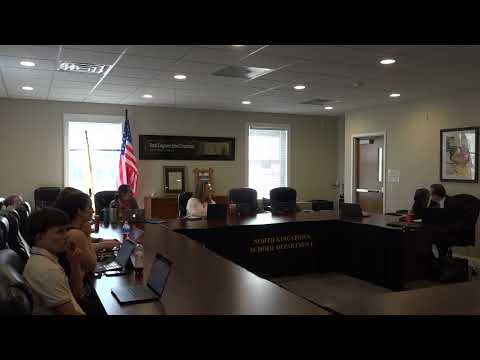
North Kingstown’s Policy Advisory Committee spent the bulk of its May 26 meeting debating whether to raise the district’s change-order approval threshold for capital improvement projects to avoid construction delays that can arise when every field change requires full committee approval.
Sam Bridal, owner project manager at Peregrine, told the committee that other districts give a small ownership working group authority to approve change orders quickly and then report back to the advisory committee. “First off, we have weekly meetings with what we call our ownership group,” Bridal said, describing a process used in East Providence and other districts. He warned that waiting for monthly or school-committee approvals can “throw off our timeline of completion of projects” and, in extreme cases, cause contractors to walk off the job.
Bridal noted that the current procurement policy’s change-order cap is $20,000 and urged the committee to permit larger, project-level change orders so work is not delayed. “I would say 150,000 as a potential cap,” he said when discussing past projects; he also gave examples of projects that had aggregated several small requests into much larger totals. Bridal told members that on a prior large project an initial $3–4 million soil-remediation estimate was negotiated down to “just shy of $200,000” through iterative work by the project team.
Committee members pushed back on six-figure caps, raising concerns about transparency and the risk that multiple approvals could cumulatively shift the budget. “I have concerns. I think a $150,000 is a lot,” one committee member said, adding that repeated unilateral decisions at that level could erode public trust. Members discussed middle-ground options, including caps in the high five figures and a percentage-based approach tied to each individual project.
Several participants favored a rule keyed to the size of an individual job rather than to an overall bond. One member suggested a floor/percentage hybrid—e.g., “change orders not to exceed 1% of the project cost,” which would produce different numeric caps for a $4 million roof versus a multiwing building. A parent in the meeting urged clarity and predictability so summer CIP work (roofs, windows, security upgrades) could begin promptly.
The committee agreed to add a CIP-specific paragraph to the existing procurement/purchasing policy rather than create a separate policy. Members discussed language that would cover capital-improvement projects and would define the test case for a cap (suggested examples included roughly $50,000 or a metric close to 1% of the individual project). The chair moved to amend the purchasing policy with the changes discussed; that motion was made on the record, but the transcript does not record a roll-call vote on that specific amendment.
Next steps: staff and legal counsel will draft the exact wording (defining “project” and whether the cap is fixed or percent-based) and return the language to the committee for final approval. The committee also agreed to revisit a separate rule for the new middle school project in the fall, when contract terms and project budgets will be clearer.
Why it matters: raising the administrative approval threshold could speed repairs and reduce schedule risks on summer CIP work, but it shifts the balance between expediency and public oversight. The committee is attempting to preserve transparency (regular reporting/ratification) while reducing logjams that can inflate costs and delay school openings.