Get Full Government Meeting Transcripts, Videos, & Alerts Forever!
Get email alerts on the Grid Capacity Ai topic
No spam. Unsubscribe anytime.
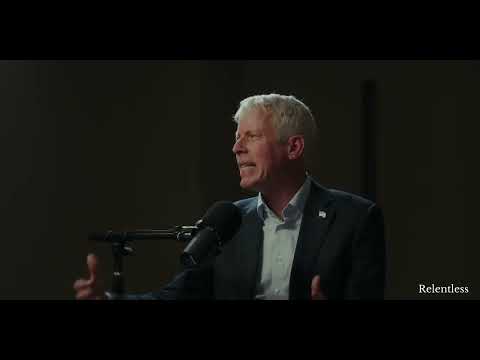
Energy secretary: regulatory reform, gas and nuclear restarts are key to powering AI data‑center growth
Summary
U.S. Energy Secretary Chris Wright told an interview audience that regulatory barriers have constrained electricity growth and that a combination of natural gas, restarted nuclear plants and fast‑tracked test reactors will be needed to meet AI‑driven demand.
U.S. Secretary of Energy Chris Wright said regulatory barriers at federal and state levels have kept U.S. electricity growth near flat and must be removed if the country is to meet surging demand from artificial‑intelligence data centers. "There's many levels of complexity at FERC, at independent system operators, at state level, at federal level," Wright said, adding that the administration is shifting from what he called "energy subtraction to energy addition."
Wright framed the problem as largely regulatory and procedural rather than technical, and said the administration had intervened this year to stop the scheduled closure of 17 gigawatts of coal plants. He described a near‑term program of bringing 11 test reactors to criticality on an expedited timeline and said Nuclear Regulatory Commission staff are working alongside Department of Energy teams to observe tests and accelerate licensing: "These reactors...will be run in test reactor mode, Not gonna sell electricity out of them, but that's a great first step."
Why it matters: Analysts and industry officials say that AI development and large data centers could raise electricity demand materially over the next decade. Wright argued that what determines grid reliability is deliverability at peak hours and pointed to a recent winter weather event that tested systems in the Northeast, where nuclear, gas and some oil‑fired dual‑fuel plants supplied critical power. "What matters is those hours of peak demand time," he said.
On short‑term capacity, Wright said natural gas will be the dominant new source of firm power in the next five years because gas plants are faster and cheaper to deploy than other options. He also highlighted steps to raise output from existing plants, including up‑rate programs for gas and nuclear units. On transmission, Wright proposed reconductoring existing power lines with higher‑capacity conductors to increase throughput and said the administration is pushing permitting reforms to shorten interconnection and pipeline timelines.
Wright tied the policy push to national competitiveness, saying the U.S. must move at "the speed of AI" to avoid losing ground to other countries. He described a mix of near‑term actions (stopping closures, finishing restarts) and longer‑term strategies (scaling manufacturing of reactors and other machines) to increase dispatchable capacity.
The interview closed with Wright urging entrepreneurs and developers to engage with DOE about sites and permitting to accelerate projects; he said the department has land and lab capacity that can be made available to developers. The exchange did not record formal commitments beyond program descriptions, and no new legislation or regulatory rule text was announced.