Get Full Government Meeting Transcripts, Videos, & Alerts Forever!
Get email alerts on the Local History topic
No spam. Unsubscribe anytime.
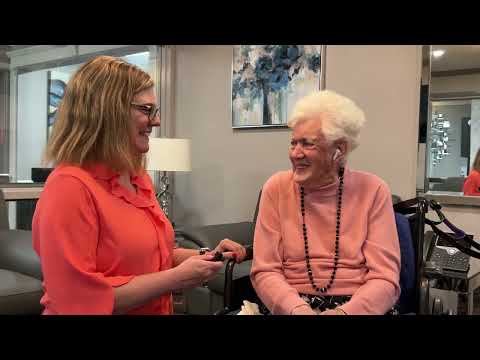
Hedden Mae Harmon recalls life on Bailey Camp Creek and at Robins Gap Orchard in Caldwell County oral history
Summary
At a Caldwell County oral-history session, 1922-born resident Hedden Mae Harmon recounted growing up around Bailey Camp Creek, running Robins Gap Orchard for 22 years, family ties to local churches and schools, and how family records have been kept by a daughter involved with the Caldwell County Historical Society.
Hedden Mae Harmon, a longtime Caldwell County resident who identified herself as "Hedden Mae Harmon," told an oral-history program that she was born in 1922 and grew up around Bailey Camp Creek before moving with her husband to Robins Gap Orchard, where they operated the orchard for 22 years.
"I was a Harmon, Hedden Mae Harmon," she said when asked her maiden name and family background, later giving her birth date as "11/25/1922." Harmon described her family origins near Booms Fork and recalled grandparents who lived on Bailey Camp and nearby places such as Booms Fork and Yaden Valley.
The interview covered everyday life across much of the 20th century in the county: school at the one-room Bailey Camp School through seven grades, church life at Lutheran and Baptist congregations, farming work done largely by hand, and community landmarks now known by different uses — for example, a site she associated with what is now Wilpah Bullock Pottery.
Harmon spoke about the practicalities of rural childhood: children walking to school and bringing simple lunches — "put cornbread and milk in them, you know, and a slice of fat back in a biscuit," she said — and she named teachers from the small local school who taught multiple grades.
She also described family service and employment: her husband later served as a dog catcher and rabies control officer for about 17 years, and Harmon worked outside the home for a time, including "down there, for 10 years" at NESO before that operation closed. She and family members also did volunteer work at local rest homes.
Harmon discussed more personal matters candidly: she said she had cataracts removed, had a toe removed because of what she called skin cancer, and that she uses special boots to reduce sores. Speaking about memory and her family’s records, she said a daughter who had been active with the Caldwell County Historical Society kept scrapbooks and family history materials.
She described a recent, vivid dream about a deceased daughter urging her to continue caring for the family's history. Harmon suggested that relatives such as a grandson named Glenn can provide additional detail and materials: "If you could run up with Glenn if you want anything else, he knows everything from senior A to Z," she said near the close of the session.
The interview, recorded as part of a program marking the 2026 commemoration of the nation’s founding, preserved a range of local names and place memories — Bailey Camp Creek, Robins Gap Orchard, Booms Fork, Wilpah Bullock Pottery, Blackberry Road and the Bailey Camp one-room schoolhouse — which Harmon and relatives have documented through photographs and scrapbooks kept by family members and the local historical society.
The program ended with the interviewer thanking Harmon (addressed in the recording as "Miss Edna") and an offer to follow up with family historians for additional context or materials.