Get Full Government Meeting Transcripts, Videos, & Alerts Forever!
Get email alerts on the Data Center Ordinance topic
No spam. Unsubscribe anytime.
Little Rock board previews June 2 vote on data center ordinance; utilities to answer questions
Summary
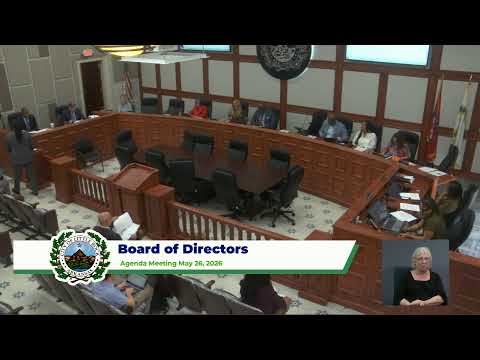
At a May 26 agenda-setting meeting, the City of Little Rock Board of Directors reviewed a proposed ordinance that would classify and limit data‑center types, restrict hyperscale facilities to heavy industrial zones and schedule a public hearing and vote on June 2; utilities including Entergy and representatives from Google will attend to answer technical questions about water use, noise and rates.
The City of Little Rock Board of Directors on May 26 reviewed a proposed ordinance that would place new rules around data‑center development and scheduled a public hearing and vote for its June 2 meeting.
Mayor Scott and planning staff said the ordinance divides data centers into three tiers—accessory, major and hyperscale—and confines hyperscale facilities to I‑3 (heavy industrial) zoning so such sites cannot be sited in residential neighborhoods. "It's up to the city board to vote up or down," Mayor Scott said, explaining the draft was prepared by the city attorney and reviewed by utility partners and would be debated and subject to public comment on June 2.
The measure also clarifies that existing data centers built and operating before the ordinance would be grandfathered. Brad, the planning staff presenter, told the board the rules address air quality, water cooling, noise, setbacks and other standards and reflect a national survey of approaches; he said accessory centers would be allowed in certain commercial districts while hyperscale would be limited to I‑3.
Entergy and other utilities will attend next week's hearing to answer technical questions. John Bethel, introduced to the board as a leader at Energy Arkansas, told members Entergy's "Fair Share Plus" approach requires large customers to pay incremental costs to serve them and said long‑term contracts can yield community benefits. "They will pay the direct costs," Bethel said of data‑center customers, adding that the Google West Memphis contract "is going to provide, about $1,100,000,000 in benefits to other rate payers over the life of the contract" and will include a $25,000,000 energy‑assistance fund.
Board members pressed staff and utilities on technical details. Vice Mayor Ward asked how the ordinance will measure water‑use effectiveness (WUE) and power usage effectiveness (PUE) specifically for IT loads and why the draft sets a WUE target of 0.5 at full load when some industry examples run higher; she also raised questions about proposed decibel limits at adjacent property lines and whether annual noise verification reports are frequent enough. Brad said utility partners and the Little Rock Water Reclamation Authority will be on the June 2 agenda to respond.
A board member who said the Google hyperscale project had been approved last year also asserted that much of the online opposition was being "ginned up in China." Another director responded skeptical of that attribution. The mayor and planning staff emphasized that the ordinance does not itself approve or stop data‑center construction but creates a local regulatory framework the board can adopt.
The board urged residents to submit written questions in advance through the city's website so utilities and staff can prepare answers for the June 2 hearing. The meeting will include a public comment period; board members said they plan to hear utility representatives and Google before casting votes.
Next step: the ordinance will return to the City Board on June 2 with utility representatives present and a scheduled public hearing and vote.