Get Full Government Meeting Transcripts, Videos, & Alerts Forever!
Get email alerts on the Appointments topic
No spam. Unsubscribe anytime.
Du Bois council approves slate of organizational appointments, names police chief
Summary
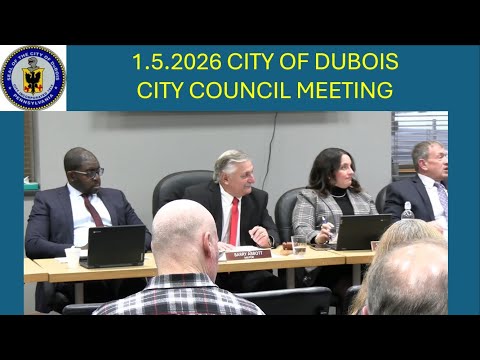
In its organizational meeting the Du Bois City Council approved a series of appointments and engagement letters — including a new general solicitor, zoning counsel, and police chief Chris Cassello — and authorized bank depositories and several authority reappointments.
The Du Bois City Council used its organizational meeting to complete a wide set of appointments and administrative approvals, including legal engagements and the naming of a police chief.
The council moved to appoint Salzman Hughes as general solicitor after a motion and voice vote. Members also approved engagement letters for special counsel on labor matters and an engagement for zoning work with Bostovich. The council named Chris Cassello as police chief after a motion to appoint him was made and seconded; the item passed by voice vote.
Councilors also confirmed administrative officers: Lisa was named the pension plan chief administrative officer and the appointment of open-records officers (Lisa primary, Ben alternate) was approved. The council authorized PennSafe to serve as the uniform construction code inspector and directed the city manager to enter an agreement with the firm. Bank depositories (Mid Penn, Mid Fed/Mid 10 and Ameriprise Financial) and signers were approved in a single motion, with the council agreeing to keep legacy municipal accounts open temporarily and revisit closures in March.
Several authority and board appointments also passed. The Du Bois Redevelopment Authority received reappointments and authorization for the city manager to review outstanding vacancies; the council approved appointments to the housing authority and moved to fill some hospital authority vacancies while leaving three seats open pending nominations.
Motions and approvals were conducted mostly by voice vote with routine seconds; where members asked for roll-call or follow-up (for example, on legacy account closures) staff were directed to return with details at the next meeting.
The council’s actions were procedural and organizational in purpose and set the governance and administrative footing for the newly consolidated city.