Get Full Government Meeting Transcripts, Videos, & Alerts Forever!
Get email alerts on the Economic Development topic
No spam. Unsubscribe anytime.
Consultants outline zoning, market and design moves to revive North Weymouth business corridor
Summary
Consultants proposed targeted zoning changes, facade upgrades, parking‑minimum reductions and concentrated commercial nodes to spur private investment in North Weymouth; they also raised climate resilience and age‑friendly design as priorities.
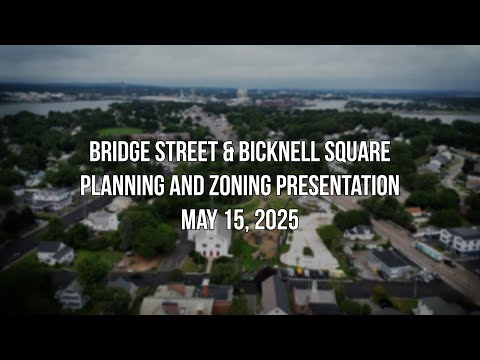
At a public forum on Bridge Street, consultants from McCabe Enterprises urged zoning and market interventions intended to attract new businesses, support mixed‑use development and preserve neighborhood character in North Weymouth.
Kathy McCabe said North Weymouth lost about 3% of its population between 2013 and 2023 and noted a relatively high median age (about 52), arguing that a more varied housing mix and age‑friendly design could help stabilize the area and support commercial investment. "Bicknell Square and Bruce Street need to be age friendly, which means having clear level walkways and easy access from where you park to where you go into the store," she said.
Key recommendations included concentrating new commercial uses east of Neck & Green Street and in Bicknell Square, discouraging new auto‑related uses outside the primary commercial area (existing auto uses could remain but not be replaced if they close longer than one year), and relaxing parking minimums (consultants suggested lowering minimums to about 1 space for studios/one‑bedrooms and 1.5 for two‑bedrooms with case‑by‑case flexibility reviewed by the zoning board).
McCabe also suggested small municipal parking lots be considered to support a concentrated commercial node and recommended facade‑improvement programs, pop‑up business supports, and permitting changes to make mixed‑use projects easier to permit while requiring design articulation to protect the neighborhood character.
The consultants flagged climate resilience as a planning imperative: they cited Massachusetts Coastal Zone Commission modeling that shows parts of Bridge Street could experience 18–24 inches of roadway flooding by 2030 under certain storm surge or sea‑level scenarios, and they recommended avoiding additional impervious surface in vulnerable areas and working with MassDOT on protective measures.
The presentation closed with a call for resident feedback; consultants will publish a written report and the slideshow with contact information through the planning department.