Get Full Government Meeting Transcripts, Videos, & Alerts Forever!
Get email alerts on the Environment Water topic
No spam. Unsubscribe anytime.
Resident warns decades of water management left Mill River too low; council refers herring-run concerns to environmental committee
Summary
Kathy Swain, a lifelong Weymouth resident, told the council May 5 that past diversions and a berm at Great Pond reduced Mill River flow, shrinking habitat and disrupting the historic herring run; the council voted to refer further study of the herring run and water sources to the environmental committee.
Kathy Swain of 134 Mill Street told the Weymouth Town Council that long-standing water-management decisions have diminished flow in the Mill River and harmed wildlife. "Over those 60 plus years, I've watched a significant drop in stream flow on the river," she said, describing a pump at Whitman's Pond and a berm at Great Pond that she said reduced flow and spawning habitat for herring.
Swain said town data show a drop in available water: "The safe yields of our ponds are 3,610,000 gallons of water daily, and in 2024, we averaged 4,000,000 gallons a day," and she noted the town exceeded its registered withdrawal volumes in 2020, 2022 and 2024. She urged the council to examine past management decisions and to prioritize ecological preservation alongside human uses.
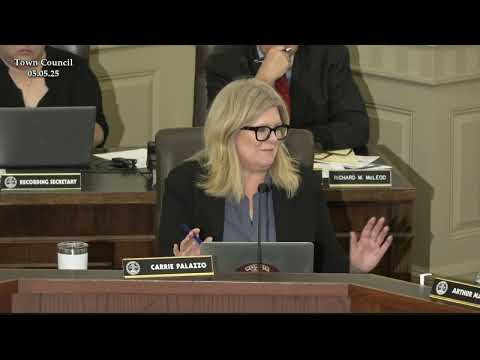
Councilors thanked Swain and discussed possible next steps. Councilor Palazzo moved to refer "further dialogue of the herring run and the water sources of Weymouth" to the environmental committee; the motion was seconded and approved unanimously. Council President said the referral will allow the committee to pursue more detailed analysis and possible conservation practices.
The referral is a next procedural step; the council did not adopt any new regulations or funding at the meeting. The committee referral signals the council will have a formal venue to gather staff reports, resident input and technical data before any policy or budget decisions are proposed.