Get Full Government Meeting Transcripts, Videos, & Alerts Forever!
Get email alerts on the Fare Modernization topic
No spam. Unsubscribe anytime.
Metropolitan Transit Commission adopts fare-modernization policy in final meeting
Summary
At its final meeting May 27, the Metropolitan Transit Commission approved an amended fare policy to implement fare modernization — including new digital payment options, two-hour electronic passes, expanded fare capping and simplified reduced-fare rules — after staff described outreach and a Title VI equity analysis.
The Metropolitan Transit Commission on May 27 adopted an amended fare policy meant to implement a multi-phase Fare Modernization Program, moving CATS toward digital payment options, simplified prices and expanded equity protections.
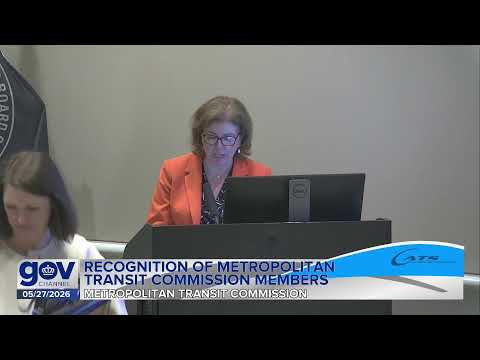
Elizabeth Persuidi, who presented the proposal, told commissioners that the updated policy would introduce new ways to pay and purchase fares, electronic two-hour passes without directionality restrictions, expanded fare capping and simplified age-based reduced-fare eligibility. "We are here tonight to bring forth for approval an amended fare policy that reflects the fare system improvements as part of the fare modernization program implementation," Persuidi said.
Persuidi told the commission staff held two rounds of public engagement (early engagement and a formal comment period in April) and completed Title VI equity analyses required by the Federal Transit Administration to assess impacts on minority and low-income populations. Staff said analyses examined average fares by population and access to the retail sales network; concerns raised by the public — particularly the potential impact on riders who use cash or who lack smartphones — were addressed through mitigation measures including maintaining cash payment options, customer education, outreach through community organizations and piloting phased implementation approaches.
The motion to adopt the policy was moved by Mayor Vai Lyle and seconded by Chair Lee Altman. Chair Altman called for a voice/hand vote; members voted in favor and the motion passed. Chair Altman characterized the vote as a milestone in moving the program into an implementation phase.
Implementation steps described by staff include further public education, engagement with community-based organizations (Persuidi cited International House and Roof Above as examples), placement planning for validators on rail platforms to protect passenger flows and accessibility, and targeted pilots to roll out specific elements earlier in a phased schedule.
Why it matters: The changes are intended to simplify fare payment and encourage ridership growth while attempting to protect low-income and cash-using riders through continued cash acceptance, outreach, and Title VI-mandated analysis of disparate impacts. The commission’s action formalizes staff direction to proceed with implementation planning and pilots.
The meeting record shows the commission adopted the amended fare policy and delegated to staff the next steps for customer education and phased pilots. The commission did not record a roll-call tally in the public remarks; the motion was approved by voice/hand vote. The commission adjourned after final remarks and a ceremonial handoff to the Metropolitan Public Transportation Authority (MPTA).