Get Full Government Meeting Transcripts, Videos, & Alerts Forever!
Get email alerts on the Land Use topic
No spam. Unsubscribe anytime.
Waynesville council denies Chick‑fil‑A conditional‑district amendment after debate on sidewalks, trees and plan consistency
Summary
The Waynesville Town Council voted to deny a proposed conditional‑district amendment for the Chick‑fil‑A site at 45 Barber Boulevard after council members raised concerns about sidewalk removal, loss of canopy trees and whether the amendment aligned with goals in the town’s 2035 comprehensive plan.
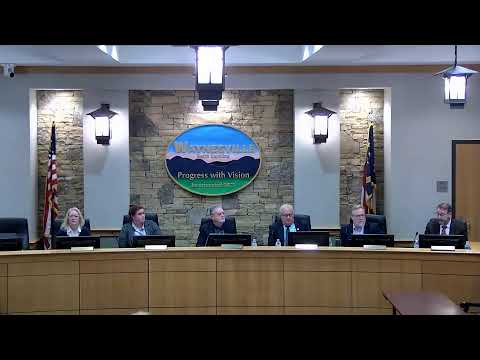
The Waynesville Town Council voted May 26 to deny a conditional‑district map amendment for the Chick‑fil‑A parcel at 45 Barber Boulevard after extended discussion about sidewalk relocation, tree removals and whether the change is consistent with the town’s 2035 comprehensive land use plan.
Olga Grumman, assistant development services director, told the council the proposal would add a second drive‑through lane and a drive‑through door, require removal of a sidewalk along the southeastern side of the property, and eliminate five maple trees and several shrubs in that area; the applicant proposed replacing those plantings and offering an easement to relocate the sidewalk to the front of the Home Trust Bank property to close an existing sidewalk gap.
The applicant’s representative described the operational rationale for the change, saying drive‑through demand at the Waynesville location has more than doubled since the restaurant opened and that the addition of a second order/fulfillment lane and a drive‑through door would let the site “deliver meals upstream and meet some of the unmet demand” while reducing queueing onto Ross Avenue. The owner/operator told council that internal customer surveys show roughly 13% of potential guests reported skipping visits in the previous 90 days because of site queues.
Several council members pressed staff on whether the access drive counts as a street under the town’s land‑development standards and asked whether the new planting plan meets canopy spacing and frontage requirements. Grumman noted the code calls for one canopy tree per 50 feet of street frontage and that the southeastern corner would not meet road‑frontage tree standards, though conditional‑district agreements can include site‑specific landscaping conditions or alternative compliance. Staff also noted the planning board had recommended conditions tied to payment‑in‑lieu and coordination on replacement landscaping.
Opponents on the council said approving the amendment could set a precedent that encourages other gateway‑corridor properties to remove sidewalks or mature trees in favor of operational expansions; proponents argued the relocated sidewalk alignment would better connect to the shopping center and that additional new trees would be planted elsewhere on the site.
After debate, the council moved to find the amendment inconsistent with the 2035 plan and then voted to deny the conditional‑district amendment (voice vote). The motion directed that the other proposed zoning items that had been bundled with this request—separate Rural Conservation District and a town‑wide special‑use permit density reduction—be handled independently and returned to the planning board as standalone text amendments.
The council’s denial ends the current amendment as proposed; staff and applicants may revise and resubmit changes through the planning board process or pursue alternative designs that keep the existing sidewalk and tree frontage.