Get Full Government Meeting Transcripts, Videos, & Alerts Forever!
Get email alerts on the Zoning Accessory Structures topic
No spam. Unsubscribe anytime.
Planning Commission backs change to allow accessory structures across commonly owned lots
Summary
The Plymouth Planning Commission voted to recommend updates to Articles 6 and 13 of the zoning ordinance to clarify when accessory structures may sit on adjoining lots owned in common and to revise the definition of a lot, aiming to reduce BZA variance requests and simplify minor additions.
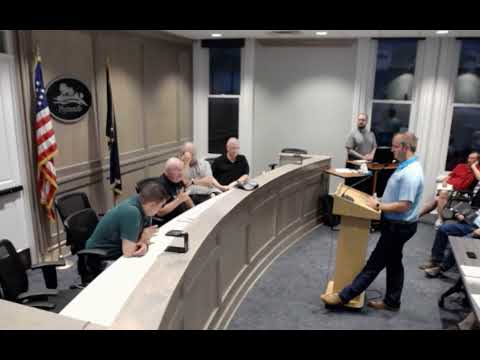
The Plymouth Planning Commission voted on Aug. 5 to recommend amendments to the zoning ordinance that would allow accessory structures—such as sheds or detached garages—on adjoining lots owned and used in common, and to revise the ordinance's lot definition to improve clarity.
Planning staff (Ty) told commissioners the two-part update to Article 6 (development standards) and Article 13 (definitions) grew from months of zoning-subcommittee work and was intended to reduce the number of cases going to the Board of Zoning Appeals. "This proposed amendment is in 2 sections: regulation of accessory structures on adjacent lots, and the definition of what a lot is," Ty said, adding the change "creates better clarity and reduce[s] the amount of potential BZA casework."
The staff analysis explained how the revision would let owners of two adjacent lots they own and use in common place an accessory structure on one lot without replatting the parcels or combining them, as long as the accessory structure remains incidental to the primary residential use and other development standards (setbacks, impervious coverage) continue to be met. Ty said the change would not permit a primary structure to straddle lots and "wouldn't apply to fences." Commissioners questioned grandfathering and whether existing structures would remain lawful; Ty replied that preexisting legal nonconforming structures would continue to be treated under current nonconforming-use rules.
Commissioners also asked whether the change would affect subdivisions, two-mile extraterritorial areas, and whether accessory buildings could be leased. Ty said the rule is intended for properties under the city's zoning jurisdiction and that an accessory structure "has to be in association with" the primary residence and cannot be leased out as a separate primary structure.
No members of the public spoke during the public hearing. After discussion, a motion to approve the amendment passed by roll call; staff will forward the Planning Commission's recommendation to the city council for final action.
The commission emphasized the change is an initial, limited update pending possible future subdivision-ordinance work; next steps are a council review and any further drafting to align the definitions with related subdivision rules.