Get Full Government Meeting Transcripts, Videos, & Alerts Forever!
Get email alerts on the Public Health Regulation topic
No spam. Unsubscribe anytime.
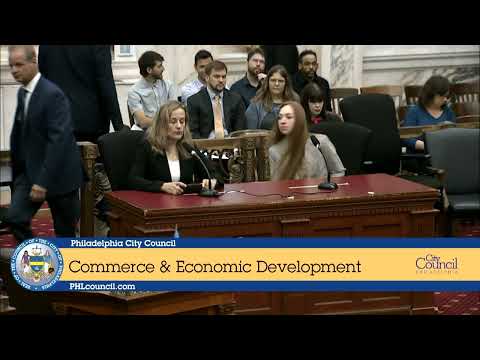
Commerce committee backs landlord‑accountability and new rules to curb unregulated hemp and kratom products
Summary
After hours of testimony from health officials, clinicians, neighborhood leaders and industry, the committee approved amendments and reported favorably two bills that would (1) hold commercial landlords partly accountable for unpermitted tobacco sales and (2) create a permit and safety standards for intoxicating hemp‑derived products and kratom, while committee members and stakeholders pressed for workable enforcement and for distinguishing natural kratom from synthetics.
Philadelphia's Committee on Commerce and Economic Development voted to approve amendments and report favorably two companion measures aimed at curbing illegal smoke shops and unregulated intoxicating substances.
What the bills would do: Bill 260162 would add a violation to the Philadelphia Code to allow enforcement action against commercial landlords who knowingly lease space to retailers that sell tobacco without a required Philadelphia tobacco retailer permit; the measure includes an affirmative defense for landlords who pursue eviction or other lawful action that effectively stops unpermitted retailing. Bill 260163 would define "intoxicating substances" to cover certain hemp‑derived cannabinoids and some kratom products, establish an intoxicating substance retailer permit, require third‑party testing and labeling, and set a minimum sales age of 21 for covered items.
Health department and clinical witnesses: Dawn Keeswetter, deputy commissioner of the Philadelphia Department of Public Health, told the committee the health department supports tools in bill 260162 and the proposed permitting approach in 260163 but does not yet have full implementation resources. Medical witnesses from Penn Medicine and the Children's Hospital of Philadelphia described clinical and poison‑control trends: Dr. Bella Kalaiil Parampil said she has treated patients with kratom‑associated substance use disorder and cautioned about concentrated 7‑OH products; Dr. Kevin Osterhout described a child who required intensive care after ingesting a delta‑8‑infused candy and said these products are being marketed alongside conventional snacks.
Neighborhood impact and enforcement concerns: Neighborhood leaders and residents testified that smoke shops and convenience stores selling intoxicating products saturate commercial corridors, that some outlets operate near schools or 24/7, and that current enforcement is inconsistent. "We need more enforcement and we need accountability," Darnetta Arcey said, citing a pair of smoke shops less than 500 feet from a school.
Industry and consumer perspectives: Industry representatives and regulated‑market advocates (including the Pennsylvania Cannabis Coalition and a regional hemp guild) urged the committee to adopt practical testing, labeling and licensing rules rather than blanket prohibition. Kratom industry advocates and consumers argued the draft's reference to FDA "section 505" drug approval could unintentionally prohibit natural kratom leaf; they urged targeted restrictions on synthetic or adulterated products and proposed consumer‑protection frameworks such as kratom consumer‑protection acts and certification standards.
Committee action: Committee leadership said a set of proposed amendments addressing definitions, alignment with pending federal regulation, permitting fees, and implementation timing were circulated and adopted. The committee approved amendments to both bills and then reported both 260163 and 260162 from committee with a favorable recommendation; members also moved to suspend council rules to permit first reading at the next council session. The votes were recorded as voice votes with "ayes" prevailing; the transcript does not record a roll‑call tally.
What remains: Committee members and advocates repeatedly pressed for clarity on enforcement capacity, laboratory testing access, and the allocation of resources so the health department and other agencies can implement new duties. Sponsors and witnesses agreed to continue an amendment and implementation process to narrow definitions, preserve enforcement practicality, and target the most dangerous products.
Next steps: Both bills will go to the full City Council for first reading; additional amendments and fiscal/implementation analyses are likely during later committee or council consideration.