Get Full Government Meeting Transcripts, Videos, & Alerts Forever!
Get email alerts on the Transportation Access topic
No spam. Unsubscribe anytime.
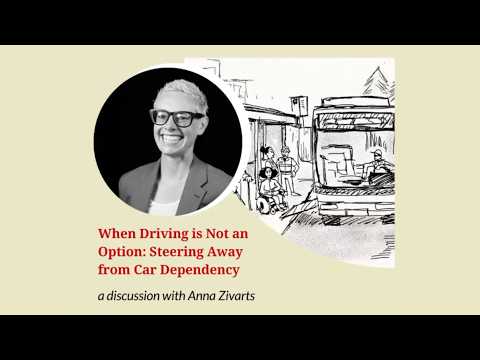
Author Anna Zivartz urges Iowa City to center non-drivers in transit and sidewalk planning
Summary
At a City of Iowa City webinar, author and disability advocate Anna Zivartz described barriers non-drivers face—missing sidewalks, unsafe rural bus stops and limited transit hours—and urged officials to prioritize accessible sidewalks, experiential engagement and the Week Without Driving campaign to inform policy.
Anna Zivartz, author and disability advocate, told a City of Iowa City webinar on May 28 that planning for people who cannot or choose not to drive should be a central part of local transportation policy. The presentation, hosted by the city's Climate Action and Outreach Division, reviewed lived experience, national and local data, and practical steps communities can take to improve access.
Zivartz said she grew up with low vision and that personal experiences, including a driving attempt that ended in a crash, motivated her to study and organize around accessibility and non-driver needs. She said many non-drivers rely on friends and family for rides, a dependence that can produce social and emotional burdens: Zivartz quoted one interviewee, Jaime Torres, saying, "It is beyond frustrating having to depend on others for transportation." Zivartz said accessible transit and sidewalks restore autonomy for people who cannot drive.
Why it matters: Zivartz cited data from the Natural Resources Defense Council’s car-access dataset showing large non-driving populations nationally and locally. She said roughly 36.6% of people in the U.S. over age 10 are non-drivers, that about 31% of people in Iowa do not rely on personal vehicles for daily travel, and that 73% of people with disabilities do not drive for most trips. Those figures, she argued, mean that sidewalk gaps, limited service hours and unsafe bus stops leave substantial shares of the public unable to travel independently.
What she recommended: Zivartz urged several practical measures for local governments. She recommended treating sidewalks and transit together—"You can't use the bus if you can't get yourself to the bus stop," she said—and gave examples of lower-cost sidewalk tactics such as asphalt walkways separated with a curb, targeted traffic calming and temporary treatments where full curb-and-gutter sidewalks are financially or logistically infeasible. She cautioned that cheaper walkways can carry maintenance and accessibility trade-offs and stressed that any solution must be designed with people with disabilities.
Engaging decisionmakers: Zivartz described the Week Without Driving campaign (this year observed Oct. 1–8) as a tool for building empathy among elected officials and agency staff. She described tactics used elsewhere—asking staff to report a weekly non-driving trip, bus ride-alongs and "bus passport" outreach to businesses along a route—to expose planners and leaders to everyday barriers. She said the campaign has grown to include hundreds of host organizations and that prior events drew elected officials and media attention.
Audience questions and local context: In a Q&A session, a neighborhood participant who led a local walk audit said the city had approved a new sidewalk connection but that funding limits made full buildout likely to take about two years. Zivartz recommended interim measures such as lower-cost paving and traffic-calming treatments while noting the political and technical trade-offs. On ADA requirements for pedestrian signals, Zivartz said signals with pedestrian phases should be accessible but noted some accessibility regulations cited by the Department of Justice have not been fully implemented nationwide and that she is not an attorney.
Resources and next steps: Organizers provided links to weekwithoutdriving.org and nondrivers.org for additional materials and signups. The webinar underscored that sidewalk funding, transit hours and stop accessibility are practical levers Iowa City can use to reduce transportation dependency and improve independent mobility for people with disabilities, older adults and residents who cannot afford cars.
The webinar concluded with host Kendall McMullen thanking Zivartz and attendees and noting that a recording and resources would be shared.