Get Full Government Meeting Transcripts, Videos, & Alerts Forever!
Get email alerts on the Cultural Resources Notice topic
No spam. Unsubscribe anytime.
Residents press Encore and PUC rules over burial sites, notice maps and excluded evidence in 765 kV hearing
Summary
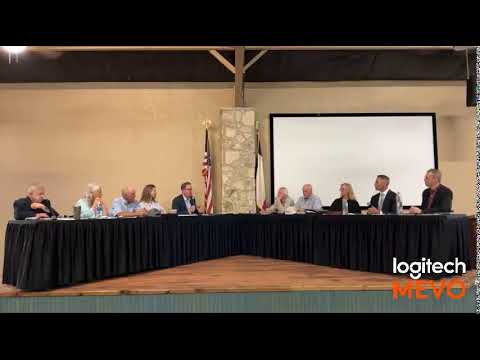
Residents and local officials in an Erath-area meeting told Encore and commission members that dozens of burial sites and other cultural resources were missing from the project’s environmental record, that mailings and hearing rules left many citizens effectively excluded, and that the Public Utility Commission’s notice parameters have left communities uncertain about protection and follow-up.
A community meeting in Erath-area counties on the proposed 765 kilovolt transmission project focused on cultural-resource protections and the public-notice process, with residents saying many family and unrecorded burial sites were not captured in Encore’s environmental assessment and that procedural rules had left hundreds without an effective hearing role.
“I currently have over 159 burial sites in our county,” a resident who identified herself as a local landowner said, citing THC records and volunteer inventories and asking how abandoned or unreported cemeteries would be protected. Encore’s lead presenter said the company used appraisal-district track numbers to generate notice lists and that its consultants supplemented aerial imagery with additional sources, but that the Public Utility Commission of Texas (PUC) defines notice parameters and the PUC order will set procedures for any minor route modifications.
Why it matters: Residents said many cemetery sites are not on the Texas Historical Commission (THC) atlas and that mailing-based notice—often tied to appraisal records—does not reach property owners who lack a current address in county tax rolls. At the hearing a speaker said many people were turned away or later dismissed from the PUC docket for procedural filing defects; Encore replied that determinations about admissibility of filings were made by administrative law judges, not by Encore.
Encore told the meeting its consultants used a base aerial map (the team said the base imagery included 2024 elements) and that video and flown imagery were taken for each link in 2025, but community members argued that imagery and reconnoissance had missed many on-the-ground features and that some evidence submitted by landowners did not make it into the official record. Encore said consultants used multiple tools, including past imagery and field reconnaissance, and that detailed, boots-on-the-ground structure siting will occur only after a route is approved by the PUC.
On next steps: Encore representatives said the PUC’s final order will include parameters governing minor route modifications and post-decision notices; they also pointed residents to the landowner mail-out attachments in Encore’s application (docket materials) for lists of mailed notices. Commissioners at the meeting urged continued outreach and requested copies of relevant permit and mitigation documents related to cultural and environmental protections.
The meeting did not produce a formal action; the commission and Encore said they will continue coordination and asked residents to use the project docket and Encore’s project manager contact for follow-up.