Get Full Government Meeting Transcripts, Videos, & Alerts Forever!
Get email alerts on the Fire Station Park topic
No spam. Unsubscribe anytime.
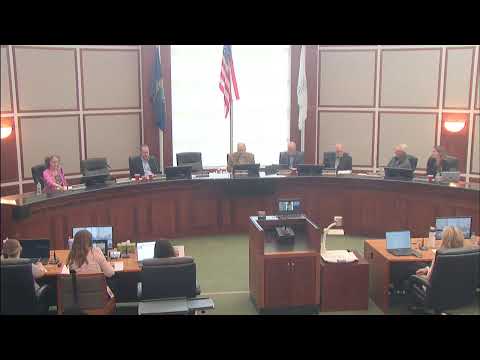
Leawood planning commission approves revised Fire Station 1 and park plan, adds HAWK pedestrian crossing
Summary
On May 26, 2026 the Leawood Planning Commission unanimously approved a revised preliminary development plan for Fire Station 1 and a new park, endorsing a HAWK (pedestrian hybrid beacon) at Lee Boulevard and asking staff and the applicant to further study sidewalks and teen amenities.
The Leawood Planning Commission on May 26 unanimously approved a revised preliminary development plan to demolish the old city hall, modify portions of the original Fire Station 1 and construct a new park with a playground, ornamental garden and supporting amenities.
Planning staff told the commission the application (Case 124-25) keeps most of the existing parking lot but removes a portion immediately behind the fire station, will resurface the remaining lot, restore a perimeter trail, add a family restroom accessible from the exterior, and relocate an ornamental garden to the west side of the old fire station. Staff recommended approval with seven stipulations included in the staff report.
City Engineer Bridal Scoville said the crosswalk proposal was changed from an RRFB (rectangular rapid flashing beacon) to a HAWK (pedestrian hybrid beacon) because a HAWK provides an overhead red signal that can stop traffic and then allow vehicles to proceed on a flashing red after pedestrians clear. "It's a newer application we're implementing in front of a lot of schools," Scoville said, noting the HAWK reduces delays once pedestrians have cleared the crosswalk.
Scott Bingham of BBN Architects, the applicant's representative, described the design changes to the parking configuration and said the project team is focused on making the park lot itself safe and accessible. "We're really focused on this particular project," Bingham said, adding the HAWK would improve crossings to the new park.
Commissioners praised the improvements compared with the November submittal but repeatedly raised concerns about pedestrian access from the east side of Lee Boulevard. Several commissioners noted that public comments and an open house on May 12 drew many residents asking for sidewalks on the east side. Scoville told the commission that, outside developer-driven site improvements, sidewalks generally are added after a resident petition that requires 75% support along the affected segment and that property owners would pay through a benefit-style funding mechanism; she said the character of Lee Boulevard — a wide collector with no curb and gutter — makes the petition approach challenging and that the city has applied for funding to perform a road safety audit.
Commissioners also asked about programming and reuse of historic structures. Parks Director Chris Claxton said programming details remain to be determined and that the project is currently unfunded: "Once that space gets relieved of all the overhead things that the fire department used to use, we'd have a better idea about what that space could be used for," Claxton said. Commissioners asked the applicant to explore whether an indoor basketball option could be accommodated in the old fire station bays without undermining other uses.
After discussion, Commissioner Block moved to approve Case 124-25; the motion carried unanimously. The commission approved the revised preliminary development plan with the seven stipulations listed in staff's report. The commission asked staff and the applicant to continue evaluating sidewalks and programming options for youth before final design and to report back as required by the approval process.
The commission's approval advances the project to the next design and permitting phases; final design choices for play equipment and programming will be determined later and the implementation timeline depends on funding and subsequent approvals.