Get Full Government Meeting Transcripts, Videos, & Alerts Forever!
Get email alerts on the Airport Governance topic
No spam. Unsubscribe anytime.
Billings council votes to pursue municipal airport authority after consultant recommendation
Summary
After a consultant review showing the airport is financially self‑sustaining, the Billings City Council voted to adopt a resolution expressing its intent to form a municipal airport authority; council approved the intent with two members opposed. Next steps include drafting a forming resolution and an FAA application.
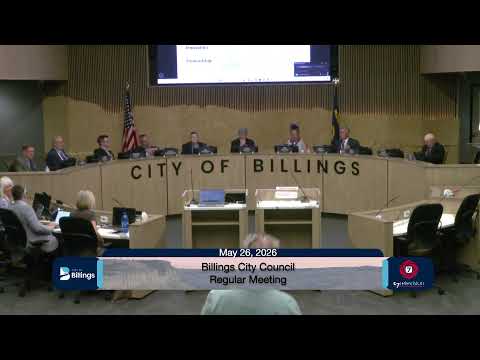
The Billings City Council voted to adopt a resolution stating the city’s intent to form a municipal airport authority, moving the airport from a municipal model toward an independent governing board that would oversee Billings Logan International Airport.
A consultant who led a governance review told the council the airport operates as an enterprise fund without needing general‑fund support and has seen operating cash‑flow growth from about $1.9 million to $4.2 million between fiscal years 2022 and 2025. The presentation said the airport has roughly $99.3 million in capital projects in its CIP, led by an estimated $34 million parking garage, roughly $3 million in outstanding bonds (reduced since last summer), and a reserve account of a little over $2 million. The consultant estimated initial transition costs of about $200,000 in year one and noted the likely need to hire at least one new HR manager.
"In recap here, it's operating self sufficiently within its own enterprise fund requiring no money from the city general fund to operate," the consultant said during the presentation.
Supporters said an authority would allow faster business decisions, more competitive compensation for airport employees and closer alignment with industry peers. Council member Scott Aspenlieder said the current arrangement forces the airport director to work through multiple city layers and slows business opportunities. "Jeff has to go through two layers of bureaucracy and management to make a decision," Aspenlieder said, arguing an authority would provide needed operational agility.
Opponents and cautious members questioned the speed of the transition and the level of outreach to frontline employees. Council member Denis Pitman moved to postpone the resolution two weeks and add a public hearing; he said staff and employees should have more time to weigh in. "I'm gonna get in the way just a little bit and slow this process down," Pitman said during debate.
Council member Bill Kennedy made the main motion to adopt the advisory committee recommendations and the intent to form a municipal airport authority; Council member Andrew Lindley seconded. The motion passed with two members recorded as voting no (Roy Neese and Denis Pitman) and the remainder in favor.
City staff and the consultant described the next phase as a two‑pronged effort: (1) draft the forming resolution, including the number of commissioners and any limits on authority; and (2) pursue required FAA consultation and an application process so the authority can assume the airport operating certificate and federal grant obligations by assignment and assumption agreements. Staff noted federal rules prohibit diverting airport assets or funds during the transition.
The council set a target timeline that contemplates Phase 2 work over the coming year, with consultants and staff returning with draft forming documents, procurement and procurement‑approval thresholds, and planned public hearings before any final transition steps are approved.