Get Full Government Meeting Transcripts, Videos, & Alerts Forever!
Get email alerts on the Land Use topic
No spam. Unsubscribe anytime.
Residents urge transparency, warn of environmental and infrastructure risks in Project Cascade comments
Summary
Two public commenters at the May 26 Marysville City Council meeting urged the city to halt or thoroughly scrutinize 'Project Cascade,' questioning whether the plan is only a warehouse or could later become a data center and raising concerns about water, power, toxins and traffic.
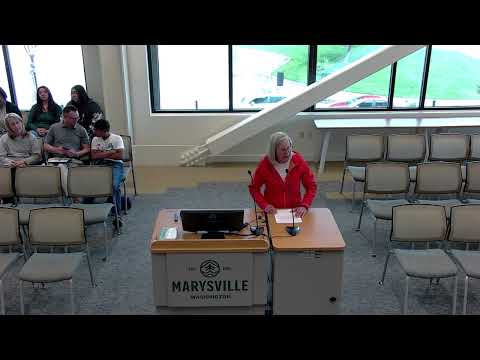
Annie Fitzgerald and Michelle Stout used the Marysville City Council public-comment period on May 26 to urge the city to demand greater transparency from developers on a proposal commonly called Project Cascade and to consider environmental and infrastructure risks before taking action.
"Marysville should want no part in Project Cascade," remote commenter Annie Fitzgerald told the council, alleging that residents were being asked to trust "vague statements" while "massive industrial development moves forward with very little transparency." Fitzgerald asked whether agreements over water, power, tax incentives and infrastructure were being negotiated "behind closed doors" and warned against "special treatments" for corporate interests.
Michelle Stout, who identified herself as a resident of the Arlington area, told councilmembers the project has been connected publicly to Amazon and questioned whether the development is strictly a warehouse or could instead host data-center operations in the future. She said the larger nearby fulfillment center is about 2,900,000 square feet and "draws 5.2 megawatt power daily," and that the new proposed facility is smaller yet reportedly needs "9.5 megawatts," a discrepancy she said merits closer scrutiny from the city.
Stout also raised environmental concerns tied to stormwater contamination, citing the chemical 6PPD-quinone (a byproduct associated with tire rubber) and its toxicity to juvenile and adult coho salmon at low concentrations. She told the council the corridor already experiences heavy traffic and warned of increased strain on utilities, water use during an ongoing regional drought and limited local job benefits compared with the scale of impacts.
The public comments preceded a brief exchange in which Councilmember Richards asked staff whether zoning could be used to limit or prohibit data centers; Director Gemmer replied that the issue is under review with the city attorney and that staff would bring options back to council.
No formal action, vote or staff report on Project Cascade occurred at the meeting. The council did not make decisions on the project during the session; councilmembers and staff said they would follow up with legal review and future briefings where appropriate.