Get Full Government Meeting Transcripts, Videos, & Alerts Forever!
Get email alerts on the Service Line Policy topic
No spam. Unsubscribe anytime.
Kasson council debates whether city should assume service-line ownership and spread repair costs
Summary
Council members discussed whether the city should assume ownership or financial responsibility for water and sewer service lines in the public right-of-way, and staff agreed to prepare research and preliminary cost estimates and return to the June 17 work session.
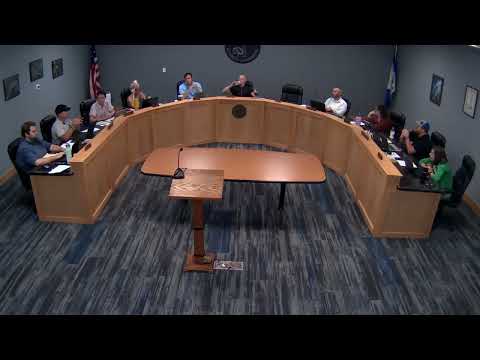
KASSON — Kasson City Council spent much of its meeting discussing whether the city should assume ownership or financial responsibility for the private portion of water and sewer service lines that lie in the public right-of-way and whether to create an insurance-style program to spread repair costs.
The item began after a council member asked staff to research “row ownership” and what it would mean for residents and the city. Paul Lindgren, who asked the council to reconsider the current policy, argued the ordinance’s language that says a homeowner “owns” the service line is misleading because homeowners lack the practical rights that normally come with ownership. “From basically any definition of ownership, it’s not really owned by the property owner because they don’t have any rights at all,” Lindgren said, adding that homeowners typically cannot access, alter, move or sell the portion of the service under the public right-of-way without city permission.
Lindgren said the financial burden when a service line fails can be substantial and singled out recent local repair bills in discussion materials, noting one smaller repair of about $10,000 and another much larger repair described as roughly $2,025,000 in an earlier packet example. He urged the council to consider whether the city should absorb those types of costs or spread them across a broader pool of ratepayers.
City staff and the engineer described models used elsewhere, notably Rochester’s “service-assured” approach. The city engineer (Brandon) explained how other cities automatically enroll customers and then allow an opt-out, or use an opt-in/assessment structure. He cautioned that shifting liability has trade-offs: it may require set-aside funds, potential bonding or rate adjustments, additional staff time, and a consistent contractor retainer to ensure timely repairs.
Council members focused on fairness and practical design. One council member said an insurance program could protect lower-income homeowners in older neighborhoods who are more likely to have failing lines; another warned that adding a monthly fee could provoke public opposition and stressed the need to clearly explain what the fee would cover.
The council did not take formal action. Members asked staff to return with research on how similarly sized cities handle service-line ownership and cost-sharing, preliminary cost estimates (including an initial-year set-aside), and staff time requirements. The mayor confirmed a follow-up at the June 17 work session at 5:00 p.m.