Get Full Government Meeting Transcripts, Videos, & Alerts Forever!
Get email alerts on the Parking Policy topic
No spam. Unsubscribe anytime.
Bradley Beach council changes special-parking rules: six-month permits, caregiver exceptions and higher fee
Summary
Council approved amendments to special-parking permits to allow a six-month summer permit for non-primary residents (April 15–Oct.15), expanded caregiver eligibility with documented contracts and multiple decals in some cases, replaced ad-hoc doctor's notes with a detailed attestation form, and raised the fee from $50 to $100.
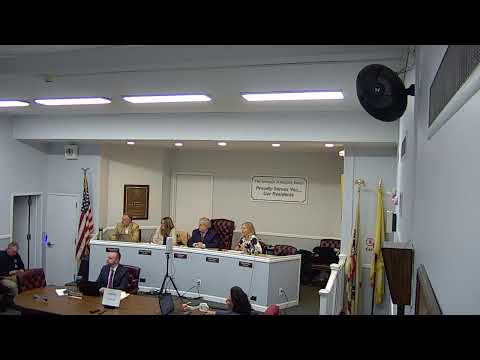
The Bradley Beach Borough Council approved revisions to its special-parking permit rules that create a two-tier system for residents and seasonal homeowners, expand caregiver eligibility and raise the permit fee.
Under the approved amendment to chapter 9 (special parking permits), residents who list Bradley Beach as their primary address will remain eligible for year-round handicap parking; seasonal or non-primary residents may apply for a six-month permit running April 15 through Oct. 15. The council said the change aims to balance accessibility for people with mobility limitations against limited year-round public street parking.
The ordinance also expands caregiver language. Where previous rules required a caregiver to live at the residence, the new language allows caregivers who work defined shifts to qualify if they meet documentation requirements: an employment assignment for at least 8 hours a day and a contract reflecting a minimum of 30 hours per week for at least three months. The council discussed enforcement and vehicle-display logistics and agreed the policy would allow multiple caregivers to be eligible while only one vehicle may use a space at a time; the draft will require display of the disabled placard while the caregiver's vehicle is parked.
Council members removed a prior reliance on informal doctor's notes and put in place a standardized attestation form. The chair said the attestation is designed to be consistent and to ask doctors to confirm whether a patient can walk a specified distance, rather than collect medical records.
The council also approved a change to the fee structure, moving the permit fee from $50 to $100 in the current draft. The chair said the council had considered higher fees earlier but settled on $100 to offset administrative and enforcement costs.
Police and council members raised practical questions about maintenance of permit lists, placard display and enforcement; one council member noted misuse of placards is illegal and said the borough will consider clarifying placard-display enforcement. The council directed staff to refine the administrative language (including striking a requirement that applicants be reviewed “during the month of January”) and agreed to apply the changes retroactive to Feb. 1 for the first-year rollout. The ordinance was approved with amendments at the meeting and will move toward adoption steps specified in borough procedures.
Quotes in context: the chair described the intent as “trying to find a balance between serving individuals who are handicapped … and all of their surrounding neighbors who value an ability to park,” and a council member warned, “You shouldn’t be using somebody else's handicap placard.”
Next steps: staff will prepare the standardized attestation form for physicians, finalize application procedures for the transition year and circulate the revised ordinance language before formal adoption.