Get Full Government Meeting Transcripts, Videos, & Alerts Forever!
Get email alerts on the Small Claims topic
No spam. Unsubscribe anytime.
Atlanta Legal Aid offers free small-claims guidance, law-library clinic in Cobb County
Summary
An Atlanta Legal Aid attorney explained how to file a small-claims case in magistrate court, described common case types and courtroom procedures, and promoted a free "Lawyer in the Law Library" clinic offering 30-minute consultations in Cobb County.
An attorney with Atlanta Legal Aid’s Cobb office walked listeners through how to file a small-claims case in magistrate court and described resources for low-income residents including a free clinic at the Cobb Law Library.
The presentation, which the attorney called general information about Georgia law and not legal advice, covered who may file small-claims suits, the court’s monetary limits and remedies, service and filing basics, deadlines, evidence and witness rules, and options such as mediation. "Today, we're gonna be learning about filing a small claims case in magistrate court," the presenter said, and reiterated, "This presentation is not legal advice."
Why it matters: Magistrate court is often the first forum people use to resolve money disputes without a lawyer. The attorney said small-claims cases resolve disputes over money and that claims above $15,000 must be filed in state or superior court rather than as small claims, a distinction that affects where a case is filed and what procedures apply.
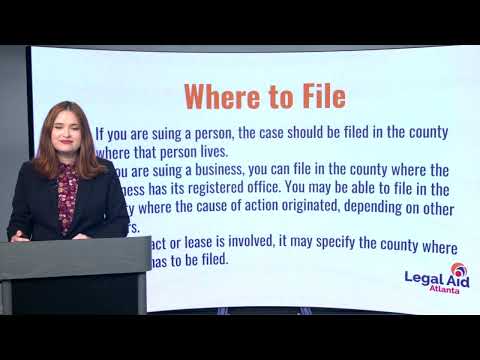
Key details from the presentation: - Common case types: breach of contract (for example, a contractor starting work and not finishing), debt-collection suits, landlord/tenant repair and security-deposit disputes, property damage, personal injury (including dog bites), and lower-value car-accident claims. - Where to file: Plaintiffs generally file in the county where the defendant lives; businesses should be sued in the county of their registered office. The presenter recommended checking the Georgia Secretary of State’s website for the business's exact legal name, registered office and registered agent so the lawsuit can be properly served. - Filing and procedure: Most magistrate courts allow in-person or online filing using a statement-of-claim form; low-income filers can ask the court for a poverty affidavit to seek a fee waiver. After filing, the defendant is usually served by the sheriff’s office or a private process server; businesses are typically served via their registered agent. - Deadlines and defaults: Defendants normally have 30 days to file an answer; if they miss the deadline some courts allow an extra 15 days for a fee. If no answer is filed the case can proceed as a default, though a hearing may still be held to determine damages. - Evidence and witnesses: The attorney emphasized bringing organized, printed evidence where possible, exchanging exhibits with the other side before the hearing, and ensuring witnesses appear in person (or are subpoenaed) because letters alone are generally not accepted as testimony. - Mediation and settlements: Courts may offer mediation and many disputes are resolved by settlement. The presenter cautioned that signing a settlement typically ends the right to a contested hearing on the settled claims.
Practical courtroom advice included punctuality and preparation: "First, do not be late," the presenter said, noting lateness can lead to dismissal for plaintiffs or default judgments for defendants. She advised planning to be at court for a full day, organizing evidence in advance and arranging childcare or time off from work.
The attorney promoted Atlanta Legal Aid’s support options: phone intake at (404) 524-5811 (Monday–Thursday, 9 a.m.–11 a.m.), an online application at atlantalegalaid.org/apply, and a walk-in "Lawyer in the Law Library" clinic at the Cobb Law Library offering free 30-minute consultations Monday–Wednesday, 9:00–11:30 a.m. and 1:00–3:30 p.m., while noting help is subject to eligibility and staffing capacity.
The presentation closed with links to additional resources, including georgialegalaid.org and the Magistrate Court of Cobb County website, and a thank-you from the presenter. The session was informational and did not create attorney-client relationships or substitute for case-specific legal advice.