Get Full Government Meeting Transcripts, Videos, & Alerts Forever!
Get email alerts on the Wildlife Management topic
No spam. Unsubscribe anytime.
Montclair council adopts ordinance banning organized lethal wildlife management
Summary
The Montclair Township Council voted unanimously in a special March 12 meeting to adopt an ordinance prohibiting organized lethal wildlife management (previously drafted as a deer culling ban), amending the language to protect 'native wildlife.' The vote followed extensive public comment from students and residents urging humane, nonlethal approaches.
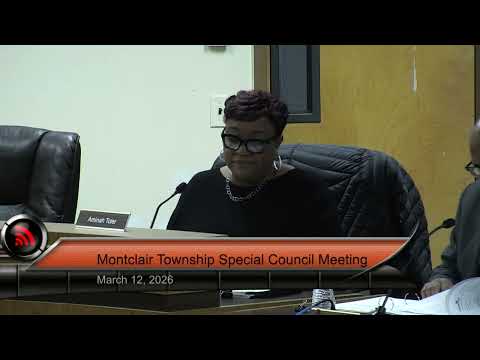
Montclair Township adopted an ordinance on March 12, 2026 that prohibits organized lethal wildlife management within township limits, after councilors amended the draft to replace references to "deer" with "native wildlife." Mayor Baskerville and three present councilors voted to adopt the ordinance as amended.
The measure was introduced by Councilor Toler and amended on the floor to broaden the protected class from deer to native wildlife. Councilor Harrison explained the change was proposed to address public comment and to avoid privileging or excluding species in the language. After the amendment was moved and seconded, the clerk recorded votes of yes from Councilors D'Amato, Harrison, Toler and Mayor Baskerville; three council members were absent.
Speakers from Montclair High School and neighborhood groups urged passage during a lengthy public-comment period. "We're asking you to pass the nonlethal deer management ordinance," Jacob, a Montclair High student, told the council, calling lethal methods "something we imagine happening in other places, and it doesn't feel like something that should happen here in Montclair." His classmate David described culling techniques used elsewhere and said some methods can be violent and are kept quiet, arguing that possibility alarmed residents.
Residents and community organizations reinforced those appeals. "Passing this ordinance now ensures Montclair will not follow that same path," Karen Sachs of the Friends of the Montclair Township Bridal Shelter told the council, citing examples of towns where surveys led to costly culling programs. Jose German Gomez, cofounder of Montclair Wildlife Habitat, said adding "native wildlife" positions Montclair "in a leadership position about environment and wildlife protection."
Supporters emphasized nonlethal alternatives and fiscal risks associated with repeated culling programs. Beth Derrico, a resident, said culling can cost taxpayers and risk public safety; she cited county programs she said cost "hundreds of thousands to millions of dollars." Speakers also noted the township's existing "peaceful coexistence" policy and urged the council to make the approach binding.
Council discussion noted practical questions remain about implementation and exceptions. The attorney and staff indicated the vote memorializes the policy direction and that the council can return to refine language or add cross-references to state guidance, if needed. The ordinance as adopted replaces explicit references to "deer" with "native wildlife" in multiple sections of chapter 82 (Animals) and, according to council discussion, also preserves the township's existing firearms/discharge controls by barring organized lethal programs within township limits without changing the underlying weapons ordinance.
The council concluded the public-comment period after additional municipal-service remarks and adjourned. The ordinance will proceed according to the township's normal codification processes and will be open for the public hearing and formal publication required by local law.