Get Full Government Meeting Transcripts, Videos, & Alerts Forever!
Get email alerts on the Environment topic
No spam. Unsubscribe anytime.
Montclair sustainability office highlights tree inventory, $1M USDA forestry grant and new composters
Summary
Lisa Johnson, head of Montclair’s Office of Sustainability, briefed residents on a USDA $1 million community-forestry grant, a 4th‑Ward tree inventory (about 434 trees recorded), a native‑landscapes planting project and four in‑vessel composters to be deployed at schools and community sites.
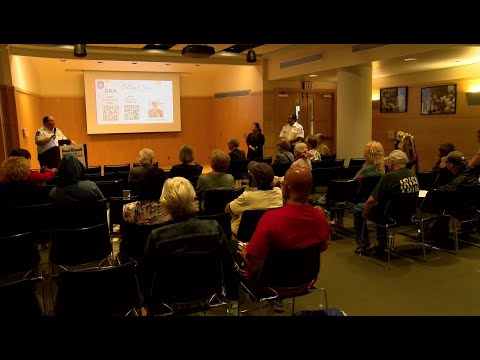
Lisa Johnson, head of the Montclair Office of Sustainability, told the Sept. 3 community meeting the township has used state and federal grants to expand tree planting, youth employment and food-waste processing.
Johnson said a USDA community forestry award of about $1,000,000 funds green-team youth employment and a multi-year tree-canopy initiative; the sustainability office piloted a 4th‑Ward inventory that recorded about 434 trees and 41 species, and found target streets such as Bloomfield Avenue and Orange Road with low tree counts. "We have almost a 100 miles of roads, and we are desperate for more street trees," she said.
The office also planted a native garden at the Crescent Deck (about 1,000 plugs) through a Sustainable Jersey grant and offers free native-landscape consults and education for residents. Johnson described benefits of native plantings—pollinator habitat, lower watering needs and pest resistance—and said the program intends to expand free consults and designs for homeowners.
Johnson announced a USDA composting food-waste reduction cooperative agreement that will fund four industrial "rocket" in-vessel composters: two destined for schools (Huachang and Bullock) and two for community partners (Montclair Community Farms and Northeast Earth Coalition on Pine Street). She said the composters will accept a broad range of food waste and will support local compost production.
Residents asked about planting timelines and invasive-species removal; Johnson said fall or early-spring planting is planned, that grant deliverables include hazard pruning and removal of invasives, and that tree-request processes are available on the sustainability web page. She said the office typically plants about 250 trees per year and will continue inventories using DEP and other grant funding.
Next steps: the office expects to complete more inventory work in the coming year, expand native‑landscape consult availability, deploy the composters within two to three months and continue outreach for resident tree requests.