Get Full Government Meeting Transcripts, Videos, & Alerts Forever!
Get email alerts on the Emergency Services topic
No spam. Unsubscribe anytime.
Montclair Ambulance Unit briefs residents on steep demand, fundraising gap and response times
Summary
Chief James Mazza told a town meeting that the independent Montclair Ambulance Unit responded to about 5,715 calls in 2024, averages roughly four-minute response times, staffs 67 paid EMTs, and needs roughly $500,000 a year in fundraising—about $300,000 more to remount a critically damaged ambulance.
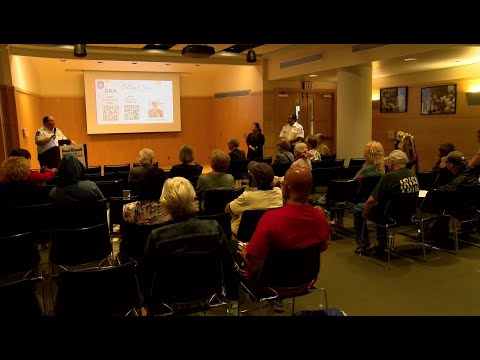
Chief James Mazza, of the independent Montclair Ambulance Unit, told residents at a Sept. 3 community meeting that the nonprofit provides around-the-clock 9-1-1 ambulance service for Montclair and depends heavily on insurance billing and local donations to keep ambulances in service.
"Montclair Ambulance Unit, an independent nonprofit emergency medical service, has been the dedicated 9-1-1 ambulance service for Montclair, New Jersey since 1953," Mazza said, noting the unit is not a township department and receives no operating capital from township taxes. He said MAU's 2025 operating budget is about $2.3 million and that roughly three-quarters of that comes from insurance billing.
The presentation included key operational figures: MAU staffs 67 paid EMTs, operates five ambulances, and recorded about 5,715 EMS responses in 2024. "Montclair ambulance unit's average response time last year was just over 4 minutes," Mazza said. He added that call volume has risen about 20% annually since the COVID-19 pandemic, and that MAU has seen a 70% average increase in mutual-aid requests from neighboring communities over the past three years.
Mazza also laid out MAU's funding shortfall. He said the nonprofit must raise approximately $500,000 a year through fundraising (mail campaigns, CPR classes, event standbys and grants) and that a recent ambulance suffered terminal engine failure, creating additional capital needs. "To scale our services to meet increasing demand, we're hoping to raise $300,000 in addition to the half million we need to operate to remount an ambulance," he said.
On funding partnerships and contracts, a resident asked whether Cedar Grove pays MAU for coverage. Mazza described a Cedar Grove RFP that includes a roughly $30,000 payment, an in-kind ambulance allocation and patient billing by MAU.
Residents also asked about electric ambulances; Mazza said a few exist but remain costly and logistically challenging. "They cost over $1,000,000 dollars, the last I saw," he said, and noted weight and bay-size constraints that would affect vehicle storage and capacity.
Mazza urged residents to support local fundraising efforts and training programs, including free opioid-overdose response courses funded in part by opioid-settlement funds. "We literally couldn't do it without you," he said of residents' donations.
Next steps: MAU encouraged the community to sign up for training, attend a fundraising event scheduled for Sept. 6 at 95 Walnut Street, and to contact MAU via chief@montclairems.org for more information.