Get Full Government Meeting Transcripts, Videos, & Alerts Forever!
Get email alerts on the Billboards topic
No spam. Unsubscribe anytime.
Spalding County planning board takes public comment on proposed digital‑billboard rules; industry backs faster messaging, commissioners ask for tighter limits
Summary
County staff presented options to modernize the sign ordinance to allow digital/multi‑message billboards. Outdoor‑advertising representatives supported option B (frequent digital changes) for emergency messaging; commissioners flagged fall‑zone language, overlay rules and whether conversions or new signs should require special exceptions and asked staff to return with a refined draft.
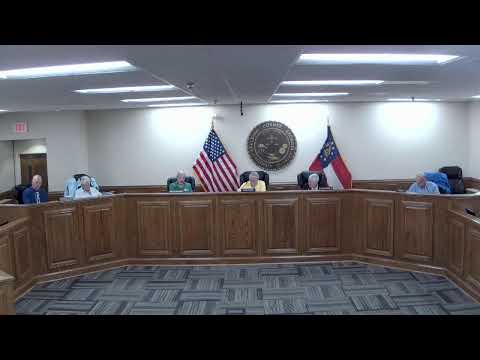
Spalding County staff presented draft changes to the sign ordinance to address digital billboards and multi‑message displays, and the Planning and Appeals Commission spent more than an hour hearing from industry representatives and discussing tradeoffs.
Staff described two primary draft options: Option A (TriVision/rotating prism technology) and Option B (digital multi‑message signs with message changes approximately every 10 seconds), plus the option of making no change. Staff noted the need to reconcile County overlay zones along US‑19 and implications for where billboards might be allowed.
Franklin Lehi, attorney for Mitchell Perkins and Perkins Outdoor, urged support for Option B, arguing the digital technology allows a sign owner to program Amber Alerts and other emergency messaging that static or TriVision signs cannot update quickly. "Utilizing the digital technology allows the sign owner to utilize the signs to display Amber alerts," he said, and he also urged the board not to apply a newly proposed fall‑zone requirement retroactively to existing sign locations.
Sign owners and industry representatives echoed that view. Mitchell Perkins, who described decades in outdoor advertising, said applying a fall‑zone requirement to existing approved boards would preclude many conversions and said he had seen only rare instances of wind damage to structures. Warren Tillery, counsel for Lamar Advertising, recommended more study and careful drafting so the ordinance cannot be easily worked around.
Commissioners pressed staff on three issues: (1) whether conversions of existing static billboards to digital should require a special exception or be an allowed conversion, (2) how the proposed rules interact with Georgia Department of Transportation corridors and existing overlays along US‑19, and (3) whether a fall‑zone requirement should apply only to new structures and not to conversions of existing, lawfully sited boards. Some commissioners favored a restricted Option C that would allow digital signs only along DOT routes and exclude neighborhood commercial areas.
No vote was taken. Staff will return with a refined draft (commissioners requested an Option C variant restricted to DOT routes and clarified language about conversions and overlays) for further review at a future meeting.