Get Full Government Meeting Transcripts, Videos, & Alerts Forever!
Get email alerts on the School Budget topic
No spam. Unsubscribe anytime.
Englewood school board deadlocks 4–4 on tentative 2026–27 budget after split over cuts and transparency
Summary
The Englewood Public School District board failed to approve a tentative 2026–27 budget, deadlocking 4–4 on a motion that would have authorized a 5.7% tax levy. Supporters warned the lower levy would force hundreds of cutbacks; opponents said they lacked adequate instructional-impact data.
The Englewood Public School District Board of Education failed to approve its tentative 2026–27 budget after a 4–4 tie, leaving the county superintendent and possibly the state to review the district’s finances.
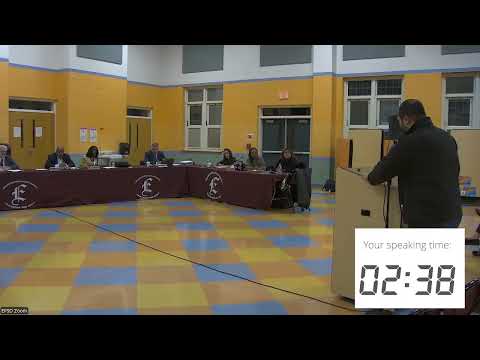
Union leaders, teachers and district administrators urged the board to authorize a 5.7% tax levy, saying the increase was needed to avoid staff reductions and program cuts. “We are asking that you approve a 5.7% budget increase, not as a luxury, but as a necessity,” Dr. Allison Morgan Black, co‑president of the Englewood Teachers Association, told trustees during the public comment period. David Vignola, the union’s co‑president, said the vote “is about decisions that will cost people their jobs and students’ opportunities.”
Superintendent Dr. Hazleton told the board that, under the 5.7% scenario the administration presented, the district was facing roughly 54 staff reductions. “Right now at 5.7%, that equates to 54 cuts,” he said, adding the administration had been consulting the Bergen County superintendent and pursuing grant and local‑funding options to reduce impacts.
Board members split over whether the administration had supplied sufficient information and over the proper role of trustees. Members voting no said they had not received a clear instructional‑impact analysis showing how funds would support classroom learning or meet New Jersey Department of Education adequacy standards, and they warned of continuing systemic problems that contributed to the district’s financial strain. “This proposal lacks a clear explanation by administration of how the requested funds will directly support the New Jersey student learning standards in the classroom,” Magali said in explaining her no vote.
Other trustees defended the administration’s responsiveness and urged passage of the preliminary budget to give the public time to review the plan and to avoid turning authority over to county or state officials. Board members and residents warned that failing to adopt a preliminary budget could prompt increased county involvement; the board attorney said the Commissioner of Education can ultimately set a district’s budget if local trustees fail to reach agreement.
After debate, the board president called for a roll call on agenda item 26 F 98 (the tentative 2026–27 budget). The vote was recorded as four yes and four no; the chair announced the motion failed on a tie. The result prompted public commenters to urge trustees to reconsider and appealed to the board to put the preliminary budget before the public instead of leaving that step for the county superintendent.
Following the vote, several residents and teachers pressed trustees to “do the one thing you’re supposed to do” and submit the preliminary budget so the community could review it and offer comment. Donovan Rodrigues, a community member, sharply criticized trustees who opposed the levy, saying their votes risked inviting state intervention.
What happens next: the county superintendent will review the district’s budget work and has statutory roles and deadlines in the review process. Trustees discussed options for reconsideration during the meeting; the transcript shows a motion to reconsider was made and roll call taken again, but the board remained divided. The county review and the statutory final‑budget deadline remain the next procedural steps.
The meeting moved toward adjournment after public comment and additional board business.