Get Full Government Meeting Transcripts, Videos, & Alerts Forever!
Get email alerts on the School Funding Enrollment topic
No spam. Unsubscribe anytime.
Tenafly board: school funding won’t automatically rise with new development; demographic study ordered
Summary
At its final budget hearing, the Tenafly Board of Education said property-tax revenue from proposed projects such as the Clinton Inn will go to the borough, not directly to schools, and approved a demographic study to project enrollment impacts and space needs before taking further action.
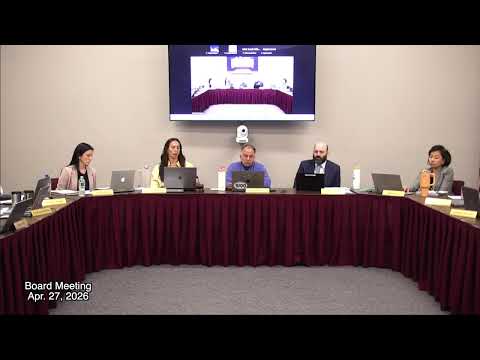
The Tenafly Board of Education told residents at its final budget hearing that tax revenue from new development does not automatically flow to the school district and that a demographic study will guide planning for any enrollment increases. Chair (speaker 1) opened the public hearing and asked Business Administrator Steven (speaker 2) to explain how the state’s tax-levy and enrollment-adjustment rules work.
“We have asked Steven, our business administrator, to give an overview just on school funding … and how we can address an increase in enrollment,” the Chair said. Steven explained that the district submits a tax levy to the township and that increases are generally governed by a 2% cap and by state calculations tied to October 15 enrollment counts. “For 25‑26, the DOE projected we’d have 3,576 students on roll,” Steven said, noting state projections and enrollment adjustments are lagged and can take one to two years to affect district budgets.
Board members pressed for plain-language answers about whether new housing could relieve pressures on taxpayers or cover the district’s costs. Trustee (speaker 4) offered an analogy: “Think of your school taxes in New Jersey like splitting a fixed restaurant bill… The total money going to the restaurant, like the total dollars going to schools, didn’t change.” The Chair summarized the practical effect plainly: “In short, the answer is no. It will not,” meaning the district will not directly receive the property-tax revenue developers say will go to the borough.
Trustees cautioned that an influx of students would raise real costs even where levy authority is limited. Steven outlined the mechanics: small single‑year enrollment increases may yield only fractional additional levy authority; to exceed the 2% cap the district would need a qualifying enrollment adjustment or voter approval of a tax question, and even then state formulas typically do not cover the full per‑pupil cost.
Developers and residents pressed the board for more concrete projections. Jonathan Krieger, who identified himself as one of the Clinton Inn developers, provided unit counts and estimated that, under certain assumptions, the project could generate roughly 40–50 new students: “If 2 kids moved into every single 3‑bedroom, you have 48 new kids… you’re talking about somewhere between 40, 50 new students, not several 100,” he said. Board members and administrators stressed those figures are scenario‑dependent and that the demographic study — expected by mid‑summer — will model best‑ and worst‑case timelines and distributions by grade level.
Trustees also warned about trade‑offs if existing specialized spaces are repurposed to create general‑education capacity: programs now housed in small‑group rooms or converted closets could be displaced, and out‑of‑district placements might rise. Steven highlighted that referendum additions (notably at Smith and Stillman) are intended to free space currently used for small‑group instruction and resource rooms.
The board closed the public hearing with a motion and roll‑call vote that approved proceeding with the budget in its presented form and set the next steps: complete the demographic study, review its findings publicly, and return to conversations about whether any formal board position on pending developments is appropriate after legal review. The board president said trustees will seek counsel on whether it is permissible and advisable to take a public stance and, if allowed, the board will put the matter on a future agenda for discussion.