Get Full Government Meeting Transcripts, Videos, & Alerts Forever!
Get email alerts on the Data Center topic
No spam. Unsubscribe anytime.
Residents urge pause on proposed QTS data center, citing water, power and health risks
Summary
Dozens of Clinton residents urged the City Council to halt or study the proposed QTS data center, raising concerns about groundwater depletion, strain on the electrical grid, noise, light and public‑health effects; several asked for a moratorium to gather more data.
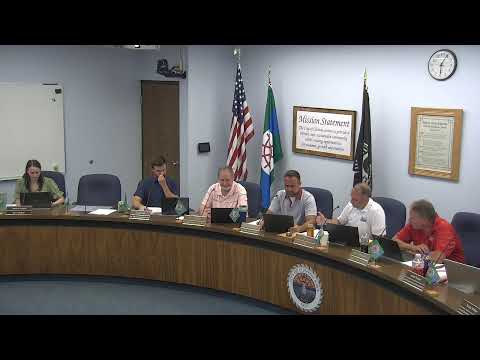
Dozens of Clinton residents used the council's public‑comment period to press the City Council to pause consideration of a proposed QTS megadata center near residential areas.
"A 114% increase" in insurance contributions — which prompted an unrelated comment earlier in public comment — and other staffing issues framed the evening, but many speakers focused on water and power for the data center. Jeff Chapman, a Clinton resident, said the facility's proximity to homes that rely on private wells posed serious risks to groundwater and quality of life and asked the council to impose "a 12 month moratorium on the QTS data center so we can be more diligent in obtaining factual information from all sides." (Jeff Chapman)
Dr. Tiffany Seward, who said she is an adjacent property owner and researches AI and data centers, provided technical estimates for water use and construction impacts: construction dewatering could pull "hundreds of millions of gallons" over 18–36 months; closed‑loop system fill could require "approximately 660,000 to 2,000,000 gallons"; cooling tower blowdown might produce "600,000 to 1,000,000 gallons of water per day"; and adiabatic evaporative cooling could use "up to 3,000,000 gallons per day." She said a 1,000‑megawatt operation could consume "up to 5.3 million gallons per day," a volume she noted is "more than twice the entire annual [sic] water consumption of the entire city of Clinton" (Dr. Tiffany Seward).
Other residents raised related concerns: Daniel Mayer, a property developer, warned of long‑term costs and hazards from a large, specialized facility and questioned the timing and transparency of council action; Amanda Burke and others reported proximity worries about noise, light and water; and Kelly Thomas, a recovery advocate, said past industrial projects have correlated locally with increased availability of drugs and strain on emergency services.
Some commenters framed their objections around governance and equity. One speaker who did not give a name argued the issue is "about transparency, accountability, and constitutional responsibilities" and asked specific questions the public wants answered about electricity and water use.
Supporters of further study suggested concrete steps: formal studies of groundwater impacts, a review of electrical‑system capacity and back‑up plans, discussion of water‑sourcing options (including municipal or river sources), and a time‑limited moratorium to allow collection of independent data. Several speakers asked the council to treat potential costs and risks to residents as part of any economic calculus.
The mayor noted that because of the way the agenda was structured the council would not discuss the project in detail at this meeting and directed the subject to the Committee of the Whole, where the council intends to hold further discussion.
Next steps: the data center topic was deferred to the Committee of the Whole for further review; individual councilmembers did not take formal action on the project during this meeting.