Get Full Government Meeting Transcripts, Videos, & Alerts Forever!
Get email alerts on the Creative Philadelphia topic
No spam. Unsubscribe anytime.
Committee backs making Creative Philadelphia a permanent city office to shore up arts funding and reach neighborhoods
Summary
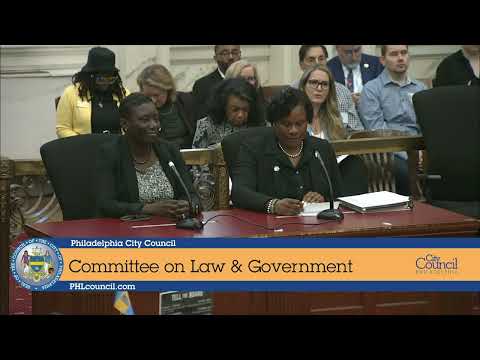
Committee on Law and Government reported favorably on a charter amendment (bill 260,264; resolution 260,270) to make Creative Philadelphia a permanent office, with witnesses arguing permanency will stabilize funding and expand arts access across neighborhoods.
The Committee on Law and Government voted to report favorably on a proposed amendment to enshrine Creative Philadelphia as a permanent city office and protect arts and culture stewardship across administrations.
Val Gey, chief cultural officer and executive director of Creative Philadelphia, told the committee the office helps steward public art, support artists and coordinate citywide cultural programming. "Philadelphia is a city whose identity has always been deeply connected to arts and culture," she said. She and others said permanency would reduce the cyclical instability arts infrastructure faces when offices are restructured or defunded across mayoral transitions.
Patricia Wilson Aden, president and CEO of the Greater Philadelphia Cultural Alliance, said the change would provide stability and visibility for a sector she said generates about $3.3 billion in local economic impact. Witnesses emphasized that permanency should be paired with multi-year, general operating support so small organizations and independent artists can plan beyond one-year grants.
Councilmembers raised questions about how permanency would translate to funding and neighborhood equity. Creative Philadelphia said it expects to present a cultural master plan this fall, which would outline funding priorities and implementation steps starting in September. Councilmembers pushed for a clear focus on distributing resources across neighborhoods that historically receive fewer arts dollars.
After testimony and questions the committee voted to report bill 260,264 and resolution 260,270 with favorable recommendations; proponents said the change will help embed arts and culture into broader city goals such as economic development, public health and neighborhood activation.