Get Full Government Meeting Transcripts, Videos, & Alerts Forever!
Get email alerts on the Library Infrastructure topic
No spam. Unsubscribe anytime.
Council hearing spotlights widespread HVAC failures and deferred maintenance across Free Library branches
Summary
Librarians, union representatives and library leadership told a City Council hearing that aging HVAC and other infrastructure forced multiple closures and canceled programs across the Free Library of Philadelphia; administration outlined phased assessments and capital requests while labor urged an accountability working group.
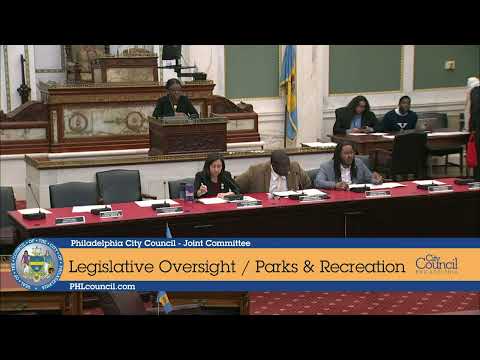
City Council committees on Legislative Oversight and Parks, Recreation and Cultural Affairs heard on May 1 that chronic heating, ventilation and air‑conditioning failures have caused repeated branch closures, damaged materials and created unhealthy workplaces across Philadelphia’s 54 neighborhood libraries.
Kelly Richards, president and director of the Free Library of Philadelphia, said the library is pursuing a systemwide, phased set of building assessments and cited recent capital spending: “we have been making open hours a serious priority” and named completed capital projects of $48,000,000 with $28,000,000 more underway. Richards told council the library has finished 10 facility assessments and is planning the next cohort to inform longer‑term capital requests.
Ty DuPass, deputy director of property management, described day‑to‑day monitoring, the difficulty of replacing outdated equipment that is not tied into automated building management systems and the long lead times for major HVAC replacements. “There’s a lead time of anywhere between 8 to 10 weeks, sometimes more,” DuPass said, explaining the sequence of design, procurement, electrical upgrades, ductwork and testing.
Union and front‑line staff testimony painted a different, urgent picture of system strain. Robert Harris of AFSCME District Council 47 and Brett Bessler, vice president and business agent for ASME District Council 47 Local 2186, urged a move from reactive repairs to proactive preventative maintenance and more in‑house capacity to avoid repeated disruptions. Bessler cited reporting that roughly 31 of 54 branches closed during last summer’s heat because of HVAC issues.
Front‑line supervisors described conditions inside affected branches. Elizabeth Gardner, supervisor at Fishtown Community Library, said staff tracked daily humidity above 55% most of June and July 2024, experienced mold growth and respiratory complaints, and used portable dehumidifiers as a stopgap. Margaret Trandafilis at Charles Santore described 171 hours of summer closures and hazardous portable units that created trip risks. Elizabeth Kenny at Bustleton and Elizabeth Mayer at Parkway Central described recurring thermostat failures and health impacts for staff working in overheated or underserviced spaces.
Aparna Palantino of the Capital Program Office said the first 10 building assessments identified about $21,000,000 in critical infrastructure needs and that the scope for those ten sites was “upwards of $100,000,000” when programmatic needs are included. Palantino described the work as both technical and programmatic—assessors reviewed mechanical, structural, plumbing and program space needs to prioritize capital requests.
Councilmembers pressed for clearer, faster timelines for assessments and for better community communication when branches must close for long repairs. Several members urged the administration to share the assessment list and to provide data on closures and turnaround times; Richards and her team agreed to supply those numbers to council.
Union witnesses and several councilmembers asked the committees to convene a standing working group—including library leadership, unions and council staff—to track repairs, ensure accountability for capital dollars and coordinate preventive maintenance across the system. The committees agreed to pursue additional coordination as a next step.