Get Full Government Meeting Transcripts, Videos, & Alerts Forever!
Get email alerts on the Public Safety Grant topic
No spam. Unsubscribe anytime.
Boston panel reviews $12.6M FIFA World Cup safety grant; councilors press for details on staffing, scope and oversight
Summary
The Boston City Council Committee on Public Safety heard from emergency-management and public-safety officials on May 28 about a FEMA-administered FIFA World Cup grant of roughly $12.57 million to reimburse overtime for policing, fire and emergency services; councilors asked about allowable uses, underspend rules, human-trafficking preparations and mutual aid.
Boston City Councilors on the Committee on Public Safety and Criminal Justice on May 28 questioned city emergency-management and public-safety leaders about how roughly $12.57 million in federal FIFA World Cup preparedness funding will be spent and overseen during summer events.
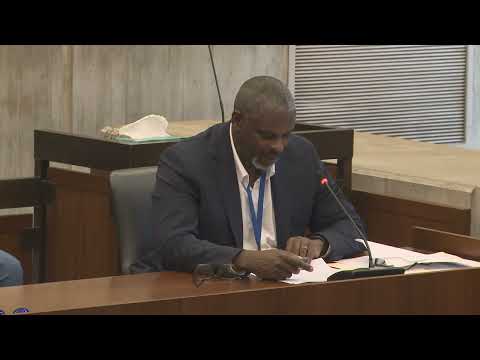
Adrian Jordan, chief of emergency preparedness for the City of Boston’s Office of Emergency Management, told the committee the grant—administered through the Department of Homeland Security and FEMA—was awarded to the state and flowed to the city, with Boston receiving $12,572,604 as a subrecipient. "This funding is not for new programs or capital projects. It is intended to reimburse eligible overtime expenses associated with operational preparedness and public safety responsibilities," Jordan said in his opening remarks.
Why it matters: Boston will host multiple World Cup–related activities this summer, including fan zones, watch parties and marches. Councilors pressed officials to explain who would staff those events, whether the money covers surveillance or equipment, and how the city will account for unspent funds.
Officials said most of the award is earmarked for personnel and operational coordination. Council members were told the Boston Police Department is budgeted to receive about $10.5 million for operational overtime, the Boston Fire Department about $1,000,000 for its operational staffing needs, and that OEM coordinated the department-level projections; the specific EMS allocation was described in testimony imprecisely and was not specified clearly on the record. Jordan and department chiefs said an additional federal award of approximately $1,200,000 was also received this week—roughly $1,000,000 for overtime and about $240,000 for equipment such as vehicle barriers and crowd-control gear—and that paperwork would be transmitted to the council before the next meeting.
Councilors asked whether the grant can fund surveillance technologies such as drones or new cameras. Jordan replied the primary grant described in the hearing is intended for overtime to support operations; panelists repeatedly characterized the funding as personnel-focused. Deputy Chief Neil Mullane described how the fire department plans to staff a Unified Command Center at 12 Channel Street, upstaff downtown units, deploy hazmat technicians and a specialized protest extrication (PET) team, and use a drone unit for real-time situational awareness. Mullane said the department’s operational target for these activities was about $1,000,000.
On whether the city keeps unspent funds, panelists said the grant reporting process typically only reimburses documented expenses: "If there's any money that is unspent, it does just not get reimbursed," said Kevin Coyne, deputy commissioner of administration and finance for the Boston Fire Department. Officials said they would follow FEMA and state reporting requirements and invoicing to recover eligible overtime costs and would check the grant scope for specific allowable items such as security at watch parties.
Councilor Lu Zheng asked about human-trafficking response and awareness campaigns; panelists said human-trafficking units will coordinate with partner agencies and that OEM public-information efforts—signage and outreach in high-traffic locations like airports and transit hubs—are an encouraged mitigation strategy. On FanFest registration, staff said signups will help gauge demand but do not guarantee admission; active queue management and capacity messaging will be used to reduce unnecessary travel to full venues.
Panelists also said mutual aid will be used for heavy-event lifts, naming regional partners including a Northeast regional law-enforcement council and the Quincy Police Department, and that some universities will provide mountain-bike assets. Officials emphasized that mutual-aid arrangements are operational and separate from the city’s grant-reimbursed overtime requests.
The committee did not take any formal votes at the hearing. Chair Henry Santana closed the session after confirming no members of the public had signed up to testify and offering condolences for recently fallen public-safety personnel. The panel asked staff to provide follow-up documentation and grant paperwork to the council prior to the next meeting.