Get Full Government Meeting Transcripts, Videos, & Alerts Forever!
Get email alerts on the Ward Road topic
No spam. Unsubscribe anytime.
Pleasant Valley residents debate whether to pave Ward Road, citing emergency access and rural character
Summary
At a Pleasant Valley listening session, residents and emergency officials split over paving the town's last unpaved mile of Ward Road: supporters cited stuck emergency vehicles and school-bus hazards, while opponents warned paving would increase speed, traffic and drainage problems and urged targeted fixes and engineering review.
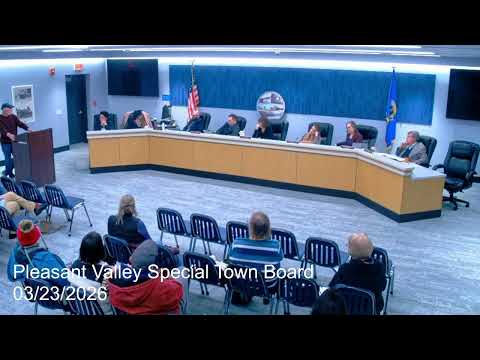
Pleasant Valley held a public listening session on Ward Road where roughly a dozen residents and local officials offered contrasting proposals for addressing chronic mud, ruts and drainage problems on the town's last unpaved mile.
The session brought forward safety concerns from emergency services and some residents, while others urged preserving rural character and using targeted maintenance. John Kronk, chief of the Bozeman Valley Fire District, said the chains carried by apparatus are "made just for ice and snow" and "do nothing in the mud," and urged solutions that ensure reliable access for first responders. "I just want what is best for the safety of the town," he said.
Supporters of paving pointed to recent winter incidents and response delays. Yasmin Jamil, who lives at 51 Ward Road, recounted a past medical emergency when it "took an extremely long time for the emergency services to arrive," and said last winter's stuck fire truck reinforced the need for safer, more dependable access. School-bus driver Mary Lou Stotanski said she drives Ward Road twice a day at about 10–15 mph because of ruts and slipperiness and worries about a bus sliding off the road.
Opponents said paving risks worsening drainage, encouraging higher speeds and increasing through traffic that would change the neighborhood's character. Samantha Knowlton, who lives at 187 Ward Road, argued that "paving will not fix the drainage problem" and warned that runoff could damage properties downhill unless engineering and drainage work were done first. Tom Boucher warned about cost and low usage, noting that the road serves a small number of houses and citing a prior allocation "of 1.5 million" dollars in the early 2000s as context for how expensive full, state-standard paving could be.
Several residents suggested compromise approaches that fall short of full paving: improving the road base, seasonal placement of quarter-inch stone after thawing periods, targeted segment fixes (a "skirt" or prioritized surfacing at the most hazardous stretches), and firming or drainage repairs in spots where culverts and runoff currently create trenches. Donald Ereco urged fixing the incline into Clinton Avenue and adding localized protections near the culvert there to reduce the chance a vehicle might slide into the ditch.
Councilwoman Chapman, who led the meeting's procedural rules, said the session was listening-only and that the town board would review collected feedback and consider engineering input and next steps at a future board meeting. The board did not vote on paving or any specific proposal at the session.
The session closed after public comments and a procedural motion to adjourn was made and seconded.