Get Full Government Meeting Transcripts, Videos, & Alerts Forever!
Get email alerts on the Buffers topic
No spam. Unsubscribe anytime.
Malta workshop weighs 100‑foot buffer for large commercial parcels to protect neighborhoods
Summary
At a town workshop, board members and planners discussed expanding the commercial‑to‑residential buffer from 40 feet to 100 feet for parcels larger than 7 acres, adding opacity standards and mitigation measures, while considering grandfathering, variances and administrative constraints; legislation drafting and a public hearing were planned.
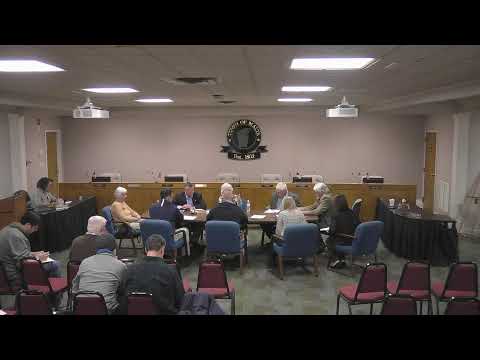
Chair (S5) opened a workshop at about 4 p.m. to finalize zoning changes recommended by the comprehensive plan, focusing first on buffers between commercial and residential land. Planners proposed keeping the current 40‑foot buffer for most parcels but increasing that buffer to 100 feet for commercial parcels of 7 acres or larger to reduce visibility and nuisance impacts on adjacent homes.
The proposal, explained by the Presenter (S4), aims to "increase the protections for residential properties from commercial potential nuisances, chiefly visible nuisances," while avoiding making moderate‑sized parcels undevelopable. "We thought that including that 100 foot buffer in properties of 7 acres or greater would kind of produce similar results because those properties could handle the 100 foot buffer," S4 said.
Board members pressed for operational details. Committee member (S6) asked whether the code would require a percentage of opacity in a 100‑foot buffer; staff and consultants said the existing code does not require added opacity at 40 feet but does impose screening when buffers are smaller. "There are tools that can measure light trespass…that would probably be the most technical way of doing it," Presenter (S4) said when asked how to measure screening and light impacts. The conversation identified common mitigation techniques—vegetative buffers, berms and fencing—and noted that lighting standards are already addressed elsewhere in the code.
Several participants urged allowance for variances or grandfathering. "If the Locust Grove Motel wanted to redevelop, they would be subject to the new…buffer if we made it a 100 foot for everything," S5 warned, and Committee member (S6) suggested a grandfathering clause for existing businesses. Staff noted that property owners may seek variances and that four legal tests must be met for a variance to be authorized.
Administrative feasibility was a recurring concern. Staff member (S9) said implementing parcel‑specific buffering will require cataloguing parcels and ensuring code language can be administered by future staff. "You do not have the commercial corridor standards in front of you…you can find that on the town of Malta website," S9 said when asked for specifics.
The board agreed to draft code language and legal counsel review. S5 said the consultant would prepare proposed legislation for the town attorney to review within weeks, with the goal of a public hearing in May and further review by the town board.
Next steps: consultants and planning staff will produce red‑line code language for board review; staff flagged potential administrative work to identify affected parcels; and the draft will be posted for public comment prior to a formal hearing.
Ending: The workshop closed for a break before the evening town board meeting; the board set a dedicated workshop on planned development districts for May 19 to continue related discussions.