Get Full Government Meeting Transcripts, Videos, & Alerts Forever!
Get email alerts on the Local History topic
No spam. Unsubscribe anytime.
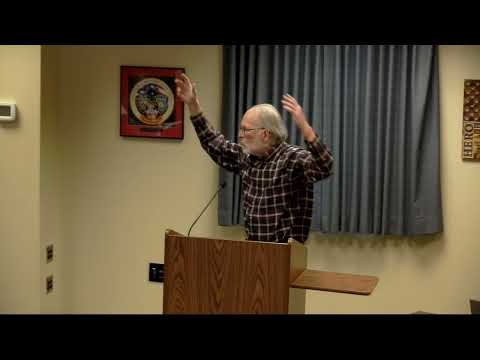
Presenter Gary highlights Lt. Gen. Henry Clark Corbin’s ties to Clermont County
Summary
At a Clermont County public program, presenter Gary outlined the life and military career of Lt. Gen. Henry Clark Corbin, emphasizing his Civil War service, role as adjutant general who helped shape the modern Army chief of staff and his local memorials in Batavia and Milford.
Gary, a presenter at a Clermont County public program, told attendees about Lt. Gen. Henry Clark Corbin’s long military career and local ties, describing Corbin as both a national figure and a Batavia property owner.
Corbin’s early years, the presenter said, included education at Parker Academy and a stint teaching before he joined the Union Army during the Civil War. Gary said Corbin transferred to the 14th United States Colored Troops and was among the early Ohio officers to command a Black unit, seeing action at Decatur, Ala., and Nashville, Tenn.
Gary recounted an anecdote about Ulysses S. Grant at a Batavia reception and quoted Grant’s wry reaction after being nicked by flying glass. “I went through two major wars. I never received a scratch, and now I come home and get injured,” Gary said, attributing the line to Grant while describing the event.
The presenter said Corbin advanced through administrative roles and ultimately served 41 years in the Army, becoming adjutant general. “Corbin drafted the language that created the position of chief of staff, which we still have today,” Gary said, crediting Corbin with helping shape the institution of the modern Army staff.
Gary described Corbin’s broad responsibilities in wartime administration — from procurement to logistics — and said the role required him to order everything “from pencils to hardtack, to coffins.” He also noted Corbin’s involvement in regulating tobacco prices in Cuba during the Spanish‑American War and his visibility at high‑level diplomatic protocols.
On Theodore Roosevelt, Gary said Corbin refused to award him the Medal of Honor after San Juan Hill, arguing it would encourage risky “cowboy” behavior; Gary added that the medal was awarded later during the Clinton administration.
Gary closed by pointing to Corbin’s later assignments, including a reportedly secret mission to China and command of the Philippine division, and to local remembrances: a plaque at the Batavia village hall and a monument in Milford’s Greenlawn Cemetery. Gary said Corbin and his wife are buried at Arlington National Cemetery and summarized that he had condensed a much longer career for the audience.
In a short exchange after the talk, a meeting participant noted that Parker Academy was “the first school in the area to educate women and people of color,” and Gary added that the academy was an early integrated school that drew biracial students and families to Pierce Township farms.
The program ended with thanks to the presenter. The talk provided local context on a nationally connected military figure and raised audience interest in regional educational history and commemorations.