Get Full Government Meeting Transcripts, Videos, & Alerts Forever!
Get email alerts on the Land Use Zoning topic
No spam. Unsubscribe anytime.
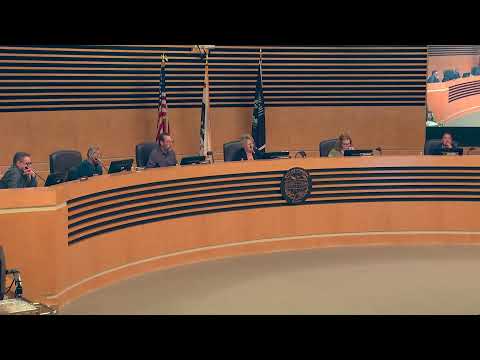
Planning Commission backs allowing small religious facilities in industrial zones, 4–1
Summary
The Corona Planning and Housing Commission voted 4–1 to recommend a zoning text amendment that would allow religious facilities up to 10,000 square feet as a minor conditional permitted use in the M-4 industrial zone; staff said the wording change replaces the term “church” with the more neutral “religious facilities.”
The Corona Planning and Housing Commission voted to recommend that City Council approve ZTA2026-0002, a change to the city's zoning code that would allow religious facilities of up to 10,000 square feet in the M-4 Industrial Park Zone as a minor conditional permitted use.
Brendan Daldee, associate planner, told the commission the amendment mainly replaces the term “church” with “religious facilities” in Title 17 and would allow small places of worship in some M-4 locations subject to a minor conditional use permit and public hearing. "Staff recommends that the Planning and Housing Commission recommend to the city council approval of ZTA2026-0002 based on the findings contained in the staff report," Daldee said.
Bruce Roman, president of Congregation Beth Shalom and the applicant for a proposed facility at 536 Queensland Circle, described an older, shrinking congregation seeking a stable, lower-cost space. "Our usage of the building is off hours from the standard business hours. Our population of our synagogue is very small," Roman said, noting the applicant completed a parking analysis and had favorable input from existing tenants.
At least one resident raised a legal concern. Mark Moran told the commission he believes the phrase "religious facilities" is broad and could be read to include schools or classrooms run by a congregation, potentially triggering sensitive-use separation requirements. "They have schools. I don't know if the commission and staff is aware of that," Moran said, asking whether ancillary classrooms would be construed as a school and subject to a different separation standard.
Staff said the name change would not alter the definition of the use; it was intended to capture a broader range of faith communities without changing the underlying regulatory tests. Daldee and other staff explained that the proposed MCUP (minor conditional use permit) would be discretionary and vetted for impacts; they also said state-level cannabis licensing does not impose a separation from religious facilities while the ABC process for breweries/restaurants has a separate negotiation process.
Commissioner Vernon moved to recommend approval to council; the motion carried 4–1. The commission record shows that approval is a recommendation to the City Council, which will take the final action and may add or modify conditions during its review.