Get Full Government Meeting Transcripts, Videos, & Alerts Forever!
Get email alerts on the District Design Process topic
No spam. Unsubscribe anytime.
Bethlehem Area School District committee issues RFP for enrollment and boundary study; members press for broader public engagement
Summary
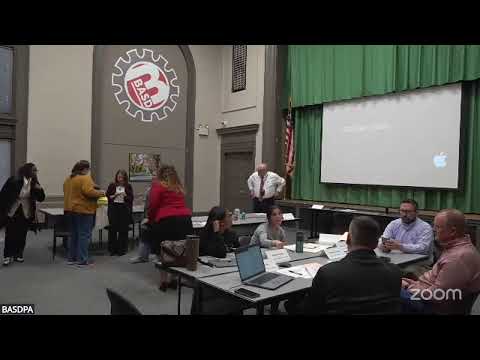
At a recent meeting, the Bethlehem Area School District district design committee reviewed a mission statement, discussed an issued RFP for a comprehensive enrollment, capacity and boundary feasibility study and debated the sequencing and scope of planned community engagement, with some members questioning the timeline and how community priorities will shape consultant scenarios.
The Bethlehem Area School District district design committee reviewed a mission statement and discussed an issued request for proposals for a comprehensive enrollment projection, building utilization and boundary feasibility study at a recent meeting. Committee members described the study as an early step in a district-wide planning effort to align enrollment, staffing, facilities and finances.
Mark Stein, introduced by committee leadership and speaking as the principal architect on the procurement, told the group the RFP (Exhibit A, starting on page 12) is intended to hire a consultant team to produce options and distill complex variables into a shortlist of actionable scenarios. Stein said proposals are expected by the end of the month, a shortlist will be interviewed in April–May, and the committee hopes to make a recommendation to the full school board by the June board meeting. He emphasized evaluation will consider qualifications and proposed teams in addition to price.
Several committee members said the RFP as written appears to define scenario parameters before the community has had a chance to set priorities. Karen (a committee member) warned that a consultant could apply technical equations and return scenarios that do not reflect neighborhood expectations. A separate committee member with community-organizing experience, Anna, urged earlier consultant engagement with residents so neighborhood realities inform scenario design rather than merely reacting to outside proposals.
Dr. Silva, who led the meeting, pointed to a companion communications and engagement strategy (described in the committee packet as a separate pink document) intended to establish values and priorities for community outreach and to report what was heard before sharing feasibility results. The engagement plan includes internal and external stakeholder meetings, targeted outreach and an early community report meant to separate factual data from later decisions and to reduce confusion when scenarios are presented.
Debate over schedule followed. One member cautioned that the timeline for a final decision by June 30, 2027, was likely too aggressive and suggested the study could extend into late 2027 or 2028. Others said the timeline can be adjusted and noted procurement safeguards: the committee can reject proposals that do not match district values and may negotiate scope after presentations.
Committee members also reported outreach to local and state legislators and municipal partners, naming senator Boscolo and mister Samuelson as contacts, and emphasized collaboration with the city of Bethlehem and other municipalities as scenarios could require external support.
Speaker 2 introduced Jennifer Loconti as the district communications manager and showcased a new district-design webpage intended as a central repository for materials, timelines and engagement tools. Members recommended additions including a clear community engagement tab, an easy-to-find comment form or survey, an FAQ page, and posted meeting dates. They urged multiple channels to reach parents, prospective families and residents who do not frequently visit the BASD site, including PTO/PTA meetings, community events, childcare centers and focus groups organized with local partners.
The committee split into two work groups for the next steps: one to refine the RFP evaluation and selection materials and one to develop engagement materials. Leadership asked small teams to produce a near-final draft of evaluation criteria and engagement content for review before the next meeting. The transcript records no formal motions or votes during the session.
The transcript did not include a date for this meeting. The committee packet materials cited in discussion (the RFP, Exhibit A, and the pink engagement strategy) are referenced throughout the transcript but were not attached to the record provided here.