Get Full Government Meeting Transcripts, Videos, & Alerts Forever!
Get email alerts on the Stormwater Management topic
No spam. Unsubscribe anytime.
MSA consultant: Saint Francis largely compliant on stormwater permit; East Layton project and 2028 deadline require planning
Summary
Eric Thompson of MSA told the council the city's 2025 MS4 annual report shows compliant operations, no repeated bacterial detections at Saint Francis outfalls, and several low-cost operational fixes accepted by the DNR; he warned the city must produce an implementation plan by 2028 for an East Layton project estimated near $1 million.
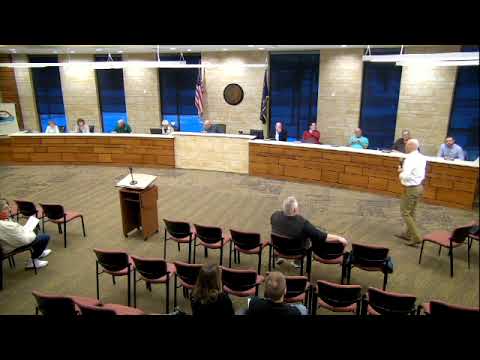
Eric Thompson, a consultant with MSA, presented Saint Francis’s 2025 MS4 (municipal separate storm sewer) annual report and told the Common Council the city is meeting most permit obligations and has reduced the need for major capital work through operational changes. "The DNR signed off on it, and everything's hunky dory," Thompson said.
Thompson framed the report in the context of the Kinnickinnic River Watershed’s total maximum daily load (TMDL) requirements and a recent DNR audit that prompted the city to document and standardize operations. He said MSA and city staff refined Public Works garage operations and wrote a stormwater pollution prevention plan so routine activity — not expensive building projects — would address the DNR’s concerns.
The consultant gave specific monitoring and operations numbers: about 470 tons of road salt were applied over the winter season; street sweepers removed roughly 74 tons of material; and sumped catch basins yielded about 25 tons — roughly 100 tons of sediment kept out of waterways for the year. Thompson also said the city removed sediment from several construction sites and that three active sites in 2025 (a Chase Bank site, Saint Francis Seminary improvements, and a Sheridan Mould site) installed compliant stormwater controls.
On bacteria monitoring, Thompson said the council had agreed a bacteria action level of 10,000 colony-forming units per 100 mL; recent Saint Francis outfall colony counts were well below that (he cited individual samples in the teens or low tens). "10,000 or more indicates a real big problem," he said, and contrasted that with counts of "2, 16, 17, 30" in recent years. Thompson said those low results could, over time, allow the DNR to remove some watershed-level bacterial reporting requirements for the city.
Thompson described a use-attainment study focused on an East Layton Avenue site in the Kinnickinnic watershed, noting airport proximity limits ponding options because of bird-strike risk. He said a realistic planning/construction figure people have discussed is on the order of $1 million and that the city's MS4 permit requires an implementation plan be ready by 2028. "So the time is ticking away," Thompson said, urging the council to budget for planning in upcoming years.
Thompson closed by reminding the council the annual MS4 report must be submitted electronically to the Wisconsin DNR by March 31; he said MSA and staff had the draft complete except for some stormwater utility budget information and did not expect problems meeting the deadline. When asked whether council approval was required, Thompson replied it was not.
Next steps: the city will finalize budget items, submit the MS4 annual report to the DNR by March 31, and in coming years must fund and prepare the implementation plan required by the 2028 schedule.