Get Full Government Meeting Transcripts, Videos, & Alerts Forever!
Get email alerts on the Bond Planning topic
No spam. Unsubscribe anytime.
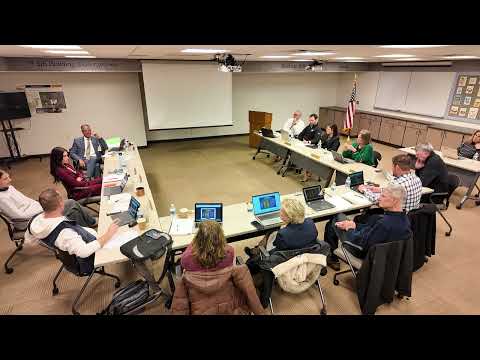
Hudsonville board workshop weighs $60 million bond buckets, prioritizing air conditioning, safety and early childhood centers
Summary
Board members and district staff reviewed a bucketed bond plan targeting roughly $60 million for the first series, emphasizing air conditioning, safety and security, playgrounds and early childhood centers; staff will refine cost estimates and enrollment projections and return to the board by late February or early March.
Hudsonville Public School District staff presented a bucketed plan for a potential bond package that would group projects into multi-year series, with roughly $60 million targeted for the first set of priorities.
The presentation laid out immediate priorities including air conditioning upgrades, safety and security technology, and playground improvements. A district presenter (Speaker 2) said staff had deliberately avoided placing firm dollar amounts on the preliminary lists so the board could provide feedback about scope and sequencing before staff assigned costs: "we've really just wanted to get feedback" and the work now is to "explore what are the feasibilities." The presenter said air quality and not just temperature emerged as the top focus in community focus groups: "It was the number 1 thing in our focus group."
Why it matters: the board must balance visible projects (new buildings, athletics) against infrastructure work voters rarely see but often value (HVAC, security and technology). The outcome will affect tax calculations, ballot language and whether the district asks voters in November or May.
Board members spent much of the meeting discussing trade-offs rather than making final decisions. Several members raised alternatives to new construction, including repurposing existing Jamestown buildings to create a 5–6 configuration instead of building a brand‑new 5–6 school, which staff said could offer substantial savings though it would look and function differently than a new building. The presenter cautioned that families in earlier planning processes had preferred new construction over renovation, and that design differences (gym size, finishes) would be noticeable.
Athletics emerged as a high-cost but not dominant theme. Staff contrasted the district's plan with neighboring Byron Center—"Byron Center's 5 is all athletics"—and warned the most expensive single item would likely be an indoor athletic facility if included. Staff noted some athletic projects are unavoidable, such as a new turf at the Baldwin campus.
Enrollment projections and site planning are central to sequencing. The board heard staff is still waiting for enrollment projections from the district's consultant, Fred Pignanovich, who the presenter described as experienced and thorough. Those projections, combined with housing‑market trends, will influence whether some projects should be placed in a later series; the presenter stressed the district cannot ask taxpayers to fund buildings it cannot demonstrate it can fill, citing state treasury constraints on building and occupancy.
Survey results were presented as broadly favorable to the proposed items. The presenter said no single item in the district survey fell below 50% favorable and that pairing popular items with less popular ones can increase support. Still, staff recommended the board narrow the list and return with numbers by the end of February or the beginning of March so ballot language and sequencing can be finalized.
Board member Mike Anderson (Speaker 1) and others emphasized community outreach strategy, suggesting messages be tailored to demographic groups—parents of young children, older residents who use district facilities, and prospective young professionals—because different constituencies prioritize different projects. The board discussed locating administrative or shared facilities near existing assets (for example, the ECC/CTE area) to improve utilization and public buy‑in, while acknowledging daytime parking conflicts at some sites.
What comes next: staff will refine cost estimates, share enrollment projections when available, and summarize options for a future board discussion. No motions or votes were recorded in this workshop. The presenter asked the board to think about sequencing and narrowed scope so staff can return with a more definitive bond proposal.
Quotes: "We don't have to finalize. I put next month, but it might just be another conversation next month," the presenter said about the timeline. Mike Anderson said modest changes to facilities could "attract young professionals" and that air quality was a persuasive focus for many parents and staff.
The board did not take formal action at the workshop; staff will follow up with refined numbers and a recommended timeline for the bond process.