Get Full Government Meeting Transcripts, Videos, & Alerts Forever!
Get email alerts on the Municipal Finance topic
No spam. Unsubscribe anytime.
City gets primer on municipal bonds and financing options; $40M 2J capacity remains
Summary
Underwriter Piper Sandler and city staff briefed council on financing tools (COPs, sales/use‑tax revenue bonds, GO bonds), noted Wheat Ridge’s AA‑minus rating and roughly $40 million remaining under the 2J authorization, and recommended continued market monitoring ahead of a likely 2027 issuance.
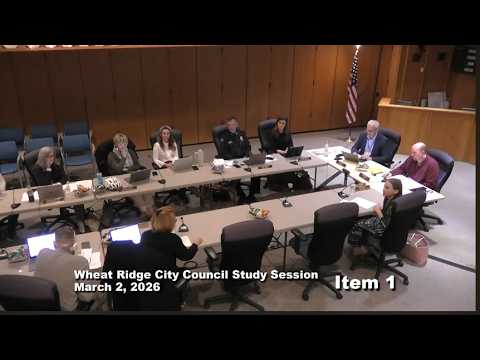
City Manager Patrick Goff and representatives from Piper Sandler briefed the council on Wheat Ridge’s municipal debt position and financing options at the March 2 study session.
Goff summarized the city's recent bond history: the 2016 voter‑authorized temporary half‑cent sales and use tax financed the 2017 '2E' projects, and voters approved a 20‑year extension in 2023 (2J authorization). The city issued a tranche in October 2024 and staff told council there is approximately $40 million in remaining 2J bonding capacity. Goff said the city’s Series 2024 bonds carried an interest rate of about 5% and that the city’s AA‑minus credit rating helped achieve favorable borrowing costs.
Andrew Moss of Piper Sandler described three common financing tools: certificates of participation (COPs), sales/use tax revenue bonds, and general obligation (GO) bonds. Moss emphasized tradeoffs: COPs typically avoid a voter election and can be repaid from any legal revenue stream but often require collateral and can carry higher interest; sales/use tax revenue bonds require voter authorization but typically offer lower borrowing costs; GO bonds are uncommon outside Denver because they almost always require property‑tax increases.
Moss walked through examples including Larimer County’s and Fort Morgan’s recent programs, and answered council questions about collateral for COPs (often essential municipal assets such as a rec center or city hall), typical COP tenors (commonly 20–30 years), and how sales‑tax questions can be structured to step down after debt payments end. "COPs do not require a bond election, which is fantastic for some communities, but investors will require collateral because COPs are annually appropriated," Moss said.
Piper Sandler also provided a market update and a forward outlook. The underwriter said markets were pricing in modest Fed rate cuts over the balance of the calendar year and that lower rates could create a favorable window for issuance. Staff and the underwriter agreed to continue coordinating the timing of any future tranche and to present specific options to council before moving forward with an issuance of the remaining 2J capacity, which staff indicated might occur in 2027.
No financing decision was made that night. City staff said they will present detailed options at a future workshop and continue to work with Piper Sandler to evaluate market and credit conditions before any formal action.