Get Full Government Meeting Transcripts, Videos, & Alerts Forever!
Get email alerts on the District Budget Millage topic
No spam. Unsubscribe anytime.
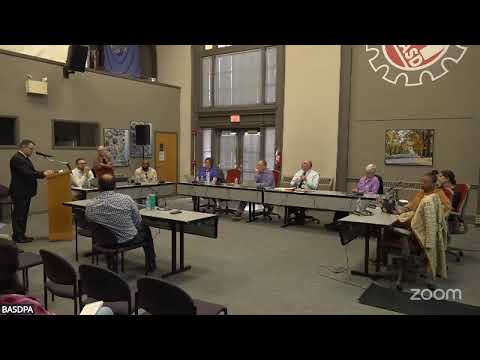
Bethlehem Area SD projects $11.7 million budget gap, proposes 3.5% millage increase
Summary
District administrators told the school board March 30 that a preliminary 2026–27 budget shows an $11.7 million shortfall under current assumptions and includes a proposed 3.5% millage increase; the presentation highlighted reliance on one-time sales and volatile interest and federal grant revenues.
The Bethlehem Area School District on March 30 presented a preliminary 2026–27 budget showing a roughly $11.7 million deficit, anchored to assumptions that include a proposed 3.5% millage increase and full receipt of certain state funding proposals.
Doctor Silva, presenting district metrics, said the district expects about 12,500 students and just over 2,000 staff members under a budget approaching $395 million. "We provide for them and go into our planning for the 2026–27 budget," Doctor Silva said, noting that more than 60% of students qualify as economically disadvantaged and about 8.5% are English learners.
Harry Eskiseyian, the district presenter, described the revenue assumptions behind the preliminary numbers: 100% of the governor's proposed BEF and SEF allocations, 50% of proposed adequacy funding and a 3.5% millage increase. He told the board that local revenue is running ahead of plan in part because of unusually high interest income in recent years, but that interest revenue is now tapering as market rates decline. "We're gonna be roughly $250,000,000 in local revenue... mainly because of the 3.5% increase in millage that we're proposing," he said.
Eskiseyian flagged several risk factors: delayed federal grant approvals that have pushed reimbursements behind schedule; reductions or political uncertainty around federal Title programs; and rising expense pressures including a 15% increase in medical costs and higher special-education and charter tuition rates. He also noted a one-time $3.1 million receipt from a building sale that is not a recurring revenue source.
Board members pressed for options to close the gap without cutting classroom services. Miss Levy asked whether the $11.7 million gap could be reduced; Silva and other cabinet members said they were already reviewing kindergarten enrollments, class sizes and noninstructional positions to find savings and avoid reductions to direct classroom instruction where possible. Doctor Silva said the executive cabinet is "already working on that number" and pointed to ongoing work to realign staff where enrollments allow.
Administrators told the board the district has an unassigned fund balance (top line) of roughly $20 million and a planned—but not yet executed—$2 million transfer to capital that could be withheld if necessary. Eskiseyian emphasized caution about relying on fund balance given volatile interest income: "We have a history of using $5 to $7,000,000 to balance the budget," he said, adding that reliance on fund balance this year would be less comfortable than in recent years.
The board discussed other options such as maximizing the Act 1 millage cap (members estimated modest additional revenue if taken) and pursuing targeted grant funding or future development that could expand the tax base. Administrators said they will return with refined scenarios and long-term projections at the April finance meeting and continue monthly budget updates through May and June.
Next steps: the board will continue to refine the preliminary budget at upcoming finance meetings and expects to present options and scenarios before the May preliminary adoption and a June special meeting to finalize the budget.